


The World Food Programme (WFP) has detailed the complex journey required to deliver emergency food aid to Afghan schoolchildren, with a recent shipment traveling nearly 15,000 kilometers across nine countries amid regional instability, border closures and logistical challenges.
The shipment, consisting of 397 metric tons of fortified biscuits donated by Indonesia, was intended to support around 172,000 students in Afghanistan as part of a $3.5 million contribution from the Indonesian government to WFP’s school meals program.
According to the UN agency, the supplies began their journey at Indonesia’s Surabaya port before being shipped to Karachi, Pakistan. However, plans to transport the cargo overland into Afghanistan were disrupted when crossings between Pakistan and Afghanistan were closed amid tensions between the two countries.
WFP officials were forced to seek alternative routes to ensure the food reached vulnerable children without significant delays.
A second plan involving transport through the United Arab Emirates and Iran was later abandoned due to instability in the Middle East and disruptions affecting regional shipping routes.
Faced with mounting challenges, WFP logisticians developed a new overland corridor stretching from Dubai through Saudi Arabia, Jordan, Syria, Türkiye, Georgia, Azerbaijan and Turkmenistan before entering Afghanistan via the Torghundi border crossing.
The 21-truck convoy traveled thousands of kilometers across deserts, highways and ferry crossings, requiring customs clearances, security assessments and transport permits at multiple international borders.
“Hunger doesn’t wait for routes to reopen,” said Corinne Fleischer, Director of WFP Supply Chain and Delivery.
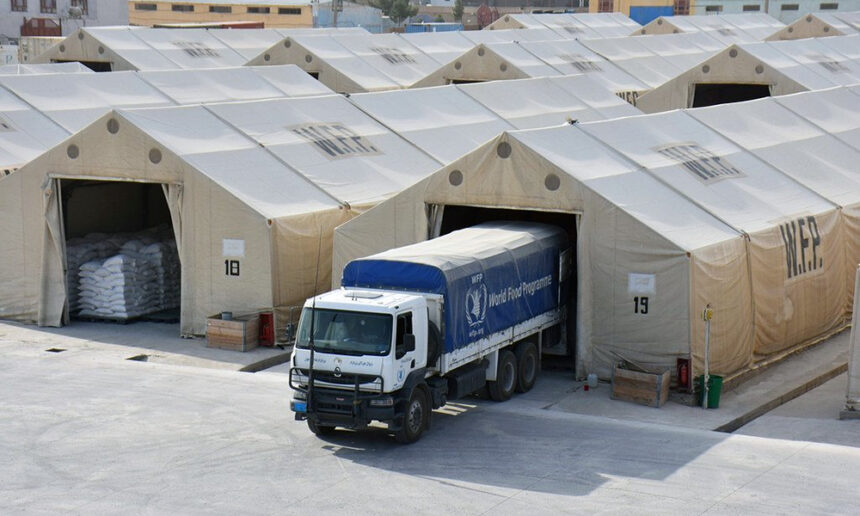
After weeks on the road, the convoy arrived in Kabul, where the biscuits were unloaded for distribution to schools in Ghor, Nuristan and Paktika provinces.
Abdul Ahad Monib, a WFP supply chain officer in Kabul, said the successful delivery reflected the organization’s determination to reach vulnerable communities despite difficult circumstances.
“For the children, it’s a packet of biscuits that helps them stay healthy,” Monib said. “For us, it’s a logistics feat.”
Afghanistan continues to face significant humanitarian challenges, including widespread poverty, food insecurity, natural disasters and declining international aid. For many students, WFP says the fortified biscuits provided through school feeding programs are among the most nutritious foods they receive each day.