


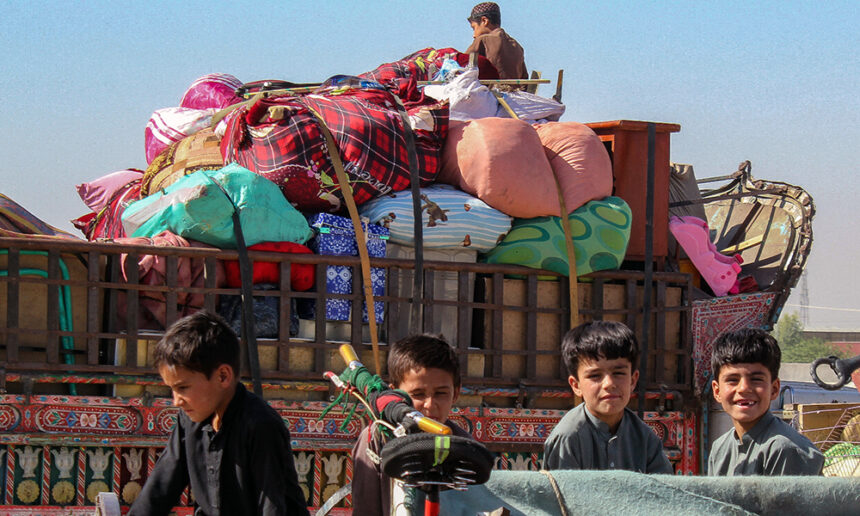
Médecins Sans Frontières (MSF), also known as Doctors Without Borders, has called on Pakistan to immediately halt the forced return of Afghan refugees and introduce humanitarian exemptions for those in need of international protection, warning that ongoing deportations are worsening an already fragile humanitarian situation.
In a statement released on Tuesday, MSF said Pakistan’s Illegal Foreigners Repatriation Plan (IFRP) has significantly restricted Afghan refugees’ access to healthcare, with many avoiding hospitals and clinics due to fears of arrest and deportation.
The medical charity said refugees have reported delaying or foregoing essential treatment because they fear documentation checks at healthcare facilities, leading to preventable health complications,
including severe child malnutrition and pregnancy-related emergencies.
MSF cited the case of an Afghan refugee identified as Najib, who said he was arrested during a police raid despite carrying a valid Proof of Registration (PoR) card. According to the organization, the incident caused severe emotional distress for his pregnant wife, who later suffered a miscarriage after delaying medical treatment because the family feared further arrests.
The organization also warned that the deportation campaign has disrupted refugees’ livelihoods, leaving many families without income while living under constant uncertainty and the threat of removal.
MSF said its mobile clinics in Quetta, Balochistan, recorded alarming levels of acute malnutrition among Afghan refugee children earlier this year. Of the children screened, 33.3 percent were found to be suffering from global acute malnutrition, including 7.6 percent with severe acute malnutrition and 25.7 percent with moderate acute malnutrition.
Nearly 90 percent of the malnourished patients treated were Afghan refugees, the majority of them women and children.
Pakistan launched the IFRP in November 2023, initially targeting undocumented Afghan nationals before expanding the policy to include holders of Afghan Citizen Cards (ACC) and Proof of Registration (PoR) cards. On July 10, authorities ordered the immediate arrest and accelerated deportation of Afghan nationals without valid visas.
Quoting figures from the UN Refugee Agency (UNHCR), MSF said more than 2.5 million Afghans have returned from Pakistan under the repatriation plan, many of them involuntarily.
The organization added that the United Nations has identified more than 70,000 Afghan refugees who could face serious risks if returned to Afghanistan.
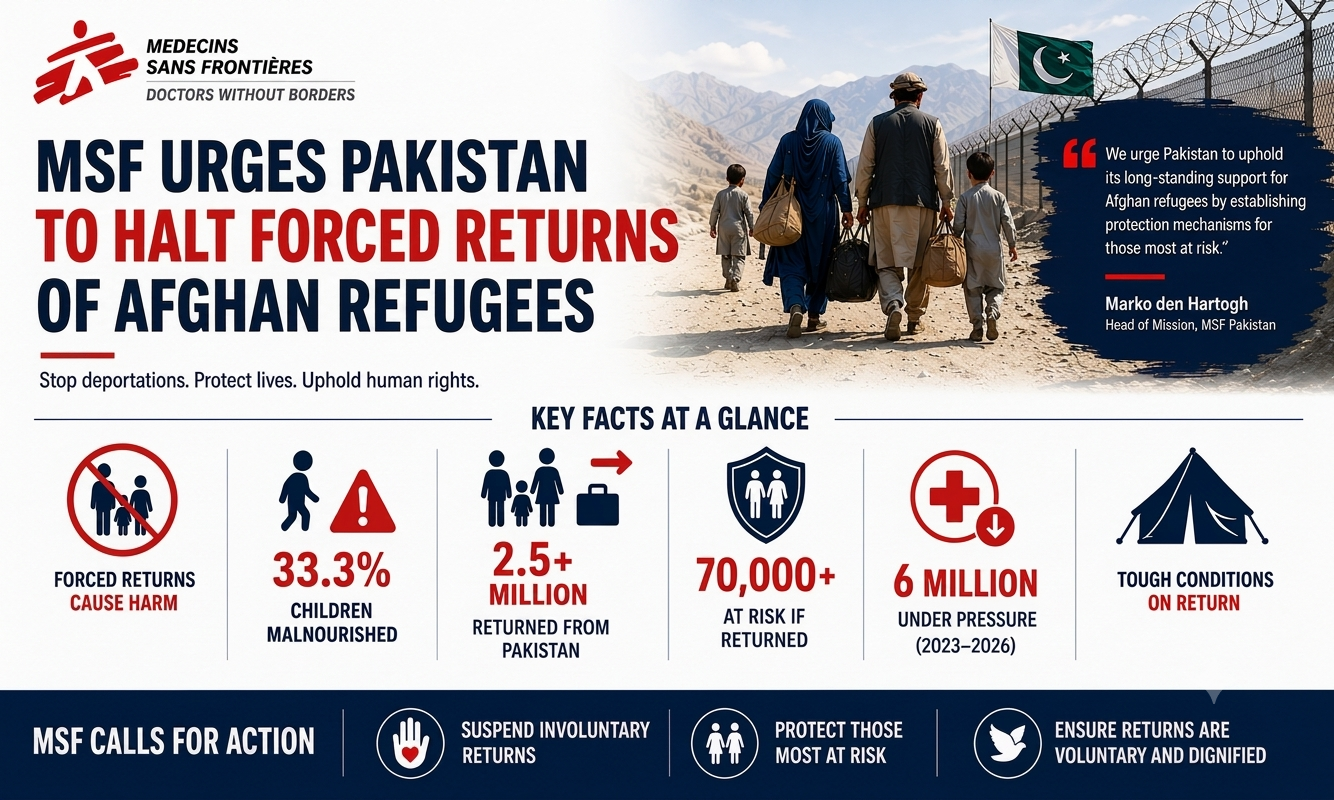
MSF warned that Afghanistan’s healthcare system is struggling to cope with the return of an estimated six million Afghans from Pakistan and Iran between 2023 and 2026. Reduced international aid, economic hardship and limited healthcare services are placing additional strain on returnees and host communities, it said.
Assessments conducted by MSF in informal returnee settlements in Kandahar found inadequate access to healthcare, poor shelter conditions, widespread undernutrition and insufficient sanitation, increasing the risk of disease outbreaks.
Marko den Hartogh, MSF’s Head of Mission in Pakistan, urged Islamabad to uphold its long-standing support for Afghan refugees by establishing formal protection mechanisms for those most at risk.
“This must include women and girls, children, the elderly, people with disabilities, those needing urgent or long-term medical care, refugees awaiting resettlement, and others at heightened risk of marginalization, discrimination, or persecution,” he said.
MSF also called on all countries hosting Afghan refugees to suspend involuntary returns and ensure that any repatriation is voluntary, safe, dignified and carried out in accordance with international humanitarian obligations.