


By Chen Qingrui
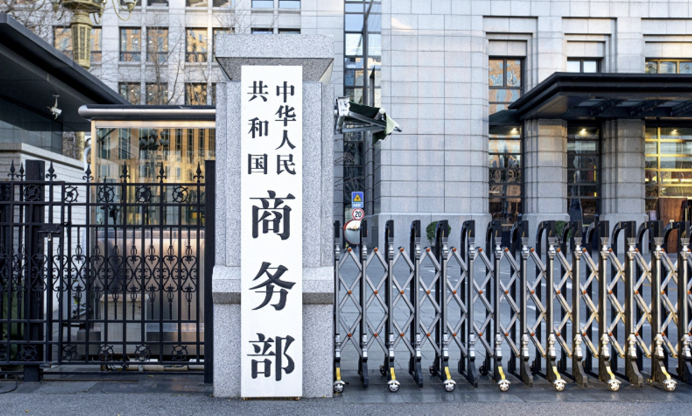
China’s Ministry of Commerce (MOFCOM) on Monday slammed the US plan to investigate and threat to sanction Chinese artificial intelligence (AI) firms, stressing that such moves lack factual basis and legal justification, and that China will take all necessary measures to firmly safeguard its legitimate rights and interests.
A MOFCOM spokesperson made the remarks when asked about some senior US officials’ recent statements that they will investigate Chinese AI companies for allegedly “distilling” cutting-edge US models, and may impose sanctions on Chinese companies on grounds such as “stealing US intellectual property.”
Chinese experts said that hostility in Washington toward Chinese AI models has continued to intensify, standing in sharp contrast to the more rational voices within US industry.
They urged US policymakers to stop spreading unfounded anxiety over China’s AI advances for political purposes, noting that building a healthy AI ecosystem is a shared global responsibility. Washington should pursue dialogue with China on an equal footing and contribute to global AI governance rather than erect barriers that fragment the industry and hinder innovation, they said.
“We have noted the relevant developments. China has consistently opposed the US politicizing and weaponizing science, technology and trade issues, as well as smearing Chinese companies and imposing sanctions under various groundless pretexts,” the MOFCOM spokesperson said.
The spokesperson further criticized the US side, which was disregarding facts such as the close release timelines of Chinese and US cutting-edge AI models and the progress made by some Chinese models, saying that it has groundlessly accused Chinese companies of relying on “distillation” or “stealing US intellectual property,” while threatening sanctions.
“These practices lack factual basis and legal justification, apply double standards in practice, and are typical acts of AI hegemony,” the MOFCOM spokesperson said.
Innovation is not the exclusive domain of any single country. Chinese AI companies have long been committed to advancing fundamental research, balancing technological self-reliance with open cooperation. Guided by the principles of consultation, joint contribution and shared benefits, they have driven the rapid development of AI technologies and achieved notable progress in areas such as coding capabilities, according to the spokesperson.
“It is also understood that many US AI companies have used distillation from Chinese models in their research and development and training processes,” the spokesperson said.
Notably, many US industry players have publicly opposed Washington’s threats to sanction Chinese AI companies. Nearly 200 US start-ups have urged the US government not to cut off access to Chinese open-source models, warning that such moves could weaken the competitiveness of US companies.
The MOFCOM spokesperson also noted that some major US multinational companies have stated that model distillation is a widely used industry practice and that US firms should be allowed to use Chinese open-source AI models.
China urges the US side to heed the objective and rational voices from industries in both countries, abandon its hegemonic mindset, and stop smearing Chinese companies and threatening sanctions, the spokesperson said, stressing that China will take all necessary measures to firmly safeguard its legitimate rights and interests in response to any actions that substantially harm China’s interests.
The spokesperson also urged the US side to earnestly implement the consensus reached by the leaders of the two countries, work with China in the same direction, strengthen dialogue and communication on AI, and jointly promote the sound and beneficial development of AI, so as to advance and improve AI governance to bring benefits to the two countries and the world.
While US policymakers continue to smear Chinese AI with unfounded accusations, the irony could hardly be greater: at a critical moment for the US tech industry, a Chinese open source AI model ended up serving as the very emergency it needed.
Recently, Hugging Face, the world’s largest AI open-source community, disclosed a cybersecurity incident involving an autonomous AI agent. When several US AI models failed to assist with analyzing the attack due to safety restrictions, Chinese Zhipu AI’s open-source GLM-5.2 model was brought in to help with the process and analyze the related data.
The incident has come as more rational voices are emerging within the US AI industry.
Beyond the public opposition voiced by Silicon Valley AI leaders, US news outlet Axios also reported on Wednesday that Nvidia CEO Jensen Huang believes America has nothing to fear from China’s open-source AI models — and everything to fear from the growing campaign to ban them. According to the report, Huang also said that American companies should “absolutely” be allowed to use Chinese models.
The debate comes amid accusations by some US companies that Chinese firms have used so-called model distillation.
According to Axios, OpenAI and Anthropic have accused Chinese companies of siphoning capabilities from their models, while warning that Beijing’s open-source surge threatens America’s AI lead.
Huang rejected the idea that OpenAI and Anthropic should be afraid of open models, arguing they expand the market by giving more people a first taste of AI, while many users will still pay for the convenience, reliability and stronger performance of closed services, read the report.
Growing anxiety voiced particularly by some US officials over Chinese AI models stands in sharp contrast to opposition from parts of the US tech industry, exposing deepening divisions between Washington policymakers and businesses, Ma Jihua, a veteran technology industry analyst, told the Global Times on Monday. By ignoring the fact that some Chinese models have reached or surpassed the global frontier and accusing Chinese firms of “model distillation,” the US is engaging in a form of AI hegemony, he said.
“AI is inherently global, relying on cross-border data, computing infrastructure and applications. Unilateral sanctions would erode trust, disrupt international research cooperation and fragment AI supply chains, damaging the US innovation ecosystem,” Ma stressed, noting that many Silicon Valley start-ups depend on affordable Chinese open-source models, and restricting access would directly weaken their competitiveness.
In contrast to the US, China has consistently advocated openness and cooperation in AI development while contributing its own ideas to global AI governance. This vision and commitment were further demonstrated at the recently concluded 2026 World Artificial Intelligence Conference.
Rather than treating it as a strategic asset to be hoarded, Beijing frames AI as a driver of shared development — one whose gains ought to be spread widely, not walled off, according to the Xinhua News Agency.
Ma urged Washington to heed industry concerns, abandon its zero-sum mindset and acknowledge China’s real AI capabilities. Equal dialogue, pragmatic cooperation and fair competition with China are essential to improving global AI governance, he said.