



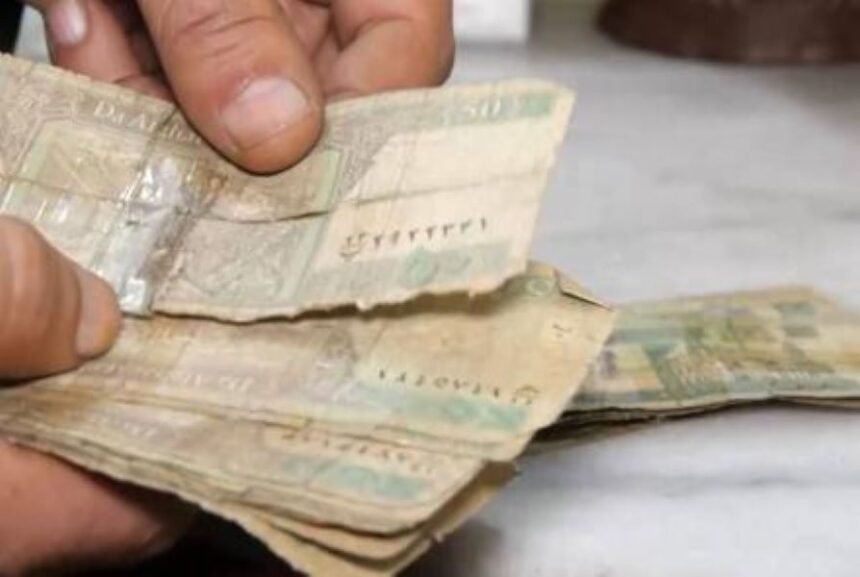
In recent years, the circulation of worn-out banknotes in Kabul’s markets has become a serious problem.
Many residents say the cash they hold is so old and torn that both customers and shopkeepers refuse to accept it.
Shopkeepers also complain about the situation, saying that customers sometimes only have damaged or worn banknotes, which leads to tensions during transactions.
Ahmad, a shopkeeper, says: “When we buy goods, they don’t accept even 100 or 150 Afghanis if the notes are worn out. But when we sell, people give us small and very old notes.”
Mohammad Younus, a driver, says: “When people give us worn-out money, we are forced to accept it. But when we try to pass the same money to others, they don’t accept it.”
Meanwhile, some Kabul residents stress that to prevent Afghan banknotes from deteriorating, greater attention must be paid to proper handling and storage.
Fazl-ur-Rahman Parwani, a Kabul resident, says: “Money should be kept properly so it does not wear out. It is better to use a wallet to store it.”
Economic analysts say that due to the widespread use of cash, poor handling, low-quality banknotes, and the lack of regular issuance of new currency, banknotes wear out more quickly.
They describe the scale of cash circulation in the country’s markets as follows:
Sayed Masood, an economic analyst, says: “Today in Afghanistan, around 30 to 40 billion Afghanis are in daily circulation, and in total, about 150 to 200 billion Afghanis are involved in commercial activities, mostly conducted in Afghan currency.”
Afghanistan’s central bank has also announced that over the past year, billions of Afghanis in worn-out banknotes have been collected and destroyed.
Hasibullah Noori, spokesperson for the central bank, says: “Over the past year, the central bank has collected and burned around 4.045 billion Afghanis in worn-out banknotes from various provinces. We ask people to take better care of money so it does not deteriorate quickly.”
However, experts emphasize that the solution is not only printing new banknotes. They say it is also necessary to improve printing quality, promote proper handling of cash, expand digital payment systems, and establish an effective mechanism for collecting and replacing worn-out currency.