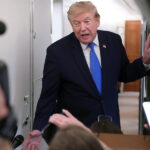




In recent statements about Afghanistan, the current U.S. President Donald Trump has made remarks that are not only far from the truth, but so repetitive and baseless that they seem to come not from a living person, but from a robot programmed with pre-recorded messages. His claims have become so monotonous that even those with little political interest find them laughable.
Since the beginning of his first election campaign, Trump has repeatedly claimed that after the U.S. withdrawal from Afghanistan, Chinese troops entered Bagram Airbase and took control of it. This assertion is not only unfounded but so detached from reality that Afghanistan’s Acting Foreign Minister recently labeled it a laughable claim. The truth is that Bagram Airbase is currently under the control of Afghan security forces, not any foreign military. To date, there exists no credible document, image, or video that supports Trump’s claim. This statement has been repeated so many times that it has become one of the most mockable talking points in Trump’s rhetoric.
Another claim Trump has made several times is that Afghanistan has become a major market for selling U.S. weapons. This, too, is an unsubstantiated allegation without any credible evidence. According to responsible officials, not only were American weapons under full U.S. control, but most of the equipment left behind was either destroyed or transferred to scrap depots. This assertion is much like a scene in a movie that keeps playing over and over again but never leads to any logical conclusion.
Behind Trump’s repeated remarks lies either ignorance, deliberate distortion, or a calculated attempt to mislead his supporters from the actual facts. Unfortunately, for the Afghan people, such statements provoke a complex reaction of laughter, pain, and insult. Afghanistan has been ravaged by decades of war, has fallen victim to international power games, and is now on a gradual path toward relative stability. Baseless statements such as these do not help resolve the country’s problems; instead, they further complicate the situation.
A careful analysis of Trump’s remarks reveals that he often repeats a handful of phrases, robotically, without evidence, critical thinking, or sound reasoning. From the perspective of international diplomacy, this behavior is not expected of a responsible statesman. Every word uttered by such a powerful figure carries global consequences. The continuous repetition of such reckless statements about a sensitive country like Afghanistan is, in fact, a blatant disregard for international relations.
Trump’s statements should be taken seriously—not only by the American public but by global political actors as well. These remarks are not just laughable; they highlight the potential dangers of such a personality holding high office. His rhetoric signals not just a threat to America’s credibility but a warning bell for global instability. For countries like Afghanistan, these confusing and misleading comments represent the early signs of another round of geopolitical manipulation.
After long years of war, the Afghan people now yearn for a peaceful life, stability, and respectful international engagement. This nation must no longer be a victim of robotic political slogans. The world should understand the realities of Afghanistan, stay away from false propaganda and baseless accusations, and seek cooperation with the Afghan people rather than humiliation.
In conclusion, Trump must abandon these repetitive, hollow, and ridiculous statements that resemble a robot’s speech. If he truly wishes to retain leadership of the world’s most powerful nation, he must begin speaking with logic, facts, thoughtful analysis, and sensitivity to people’s real pain. Talking about Afghanistan is not a political game—it is about a nation’s dignity, pride, and deep wounds. This country is not a joke, and Trump must realize that the world no longer wants robotic politics but demands real responsibility.