



Recent military strikes carried out by Pakistan inside Afghan territory have sparked serious concern among international observers, legal experts, and human rights advocates. According to statements delivered in Geneva, United Nations experts have explicitly condemned these actions as violations of international law and an infringement on the fundamental right to life of civilians.
At the core of this issue lies the principle of sovereignty and the prohibition of the use of force under the UN Charter. International law is clear: no state may carry out military operations inside the territory of another country without lawful justification. The only recognized exception is the right to self-defense, which requires clear, credible, and immediate evidence of an armed attack. In this case, experts have emphasized that Pakistan has failed to provide verifiable proof that any such attack originated from Afghan territory prior to its strikes.
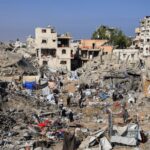
The reported bombing on the 28th day of the holy month of Ramadan represents a particularly grave incident. A rehabilitation center for drug addicts in Kabul—an inherently civilian facility—was targeted in an airstrike, resulting in the tragic deaths of 408 individuals and leaving many others injured. Such an attack, if confirmed, constitutes a direct violation of international humanitarian law, which strictly prohibits attacks on civilian objects and non-combatants.
The principles governing armed conflict, including distinction, proportionality, and necessity, appear to have been disregarded. The principle of distinction obligates parties to differentiate between military targets and civilians. A treatment center cannot be categorized as a legitimate military objective. Likewise, the scale of casualties raises serious concerns regarding proportionality, as any anticipated military advantage would not justify such extensive civilian harm.
Pakistan has claimed that these strikes targeted members of armed groups, including Tehrik-i-Taliban Pakistan (TTP). However, no credible evidence has been presented to substantiate these claims. Furthermore, there is no verified indication that such groups are operating in the locations that were struck, raising further doubts about the legitimacy of the operation.
It is also important to note that repeated incidents—both before and after this event—have reportedly resulted in civilian casualties, indicating a troubling pattern rather than an isolated mistake. This pattern strengthens concerns that these actions may not only violate legal norms but also undermine regional stability.
Beyond legal considerations, such actions risk escalating tensions in an already fragile region. They erode trust, weaken diplomatic channels, and create humanitarian consequences that disproportionately affect the most vulnerable populations.
In conclusion, the recent Pakistani strikes in Afghanistan cannot be justified under international law. They represent a breach of state sovereignty, a violation of the UN Charter, and a failure to adhere to the fundamental rules of armed conflict. The absence of credible evidence regarding the presence of armed groups further undermines Pakistan’s claims and raises serious questions about the intent and legality of these operations. The international community must take these developments seriously and work to ensure accountability, prevent further violations, and uphold the rule of law.