



Noorwali khpalwak
Amid the ongoing tensions and fragile negotiations between Iran and the United States, confidence in Pakistan’s role as a mediator appears to be steadily declining within Washington. Islamabad, which recently positioned itself as a key facilitator between Tehran and Washington, is now facing increasing scrutiny from US political and security circles.
The Iranian Aircraft Controversy and Rising Suspicion
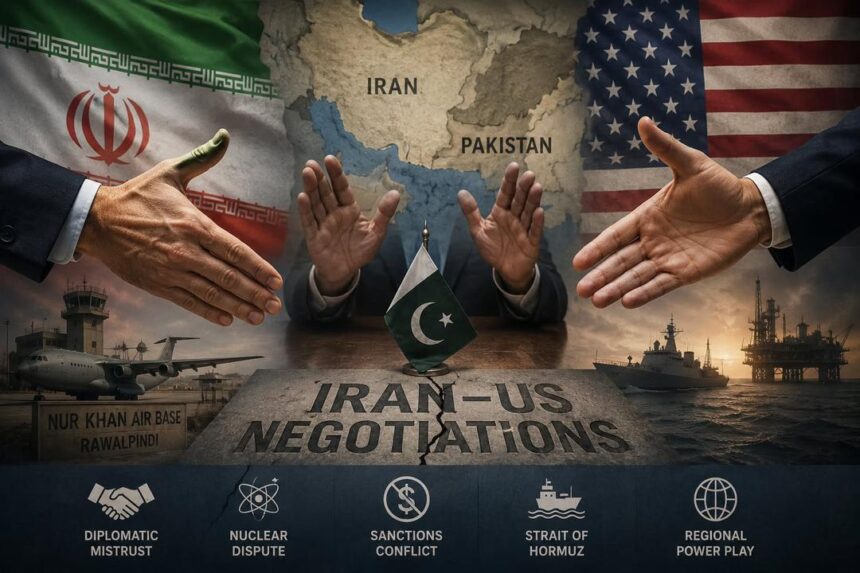
Concerns escalated after US media reports alleged that Iran had transferred several military aircraft, including reconnaissance and intelligence-gathering planes, to Pakistan. According to CBS News, citing US officials, some Iranian military aircraft were moved to Pakistan’s Nur Khan Air Base in Rawalpindi, allegedly to shield them from potential US strikes.
Pakistan strongly denied the claims, stating that the aircraft arrived strictly for diplomatic and logistical purposes linked to ongoing mediation efforts. The Foreign Ministry emphasized that Islamabad has acted as a “neutral, responsible, and constructive facilitator” throughout the process.
However, these clarifications have failed to ease concerns in Washington.
Why Washington Is Losing Trust in Pakistan
CNN reported that some officials within the administration of President Donald Trump believe Pakistan is presenting a more “optimistic and softened” version of Iran’s position to Washington than reality reflects. According to these officials, Islamabad is not fully conveying the depth of Trump’s frustration to Tehran.
This perception has deepened skepticism inside the White House, where concerns are growing that Iran may be using the negotiations to delay decisions and reduce external pressure.
Trump himself has described Iran’s latest proposal as “totally unacceptable” and warned that Washington’s patience is running out.
Structural Limits of Pakistan’s Mediation Role
Pakistan has attempted to present itself as a neutral mediator, but the complexity of the Iran–US conflict suggests that Islamabad may not have the capacity to manage such a high-stakes geopolitical crisis alone.
The dispute goes far beyond a ceasefire arrangement—it involves nuclear negotiations, sanctions, maritime security in the Strait of Hormuz, and broader regional power competition.
Washington demands that Iran significantly scale back its nuclear program and surrender enriched uranium stockpiles, while Tehran insists that sanctions must be lifted and maritime restrictions removed before any substantive concessions are made.
In such a deeply entrenched conflict, Pakistan’s role is increasingly seen as limited in scope and influence.
Expanding Diplomatic Involvement of Other Powers
As a result, other regional and global actors, including Qatar and China, are becoming more actively involved in mediation efforts. Washington is also seeking broader diplomatic channels to apply pressure on Tehran.
China, Iran’s largest economic and strategic partner, has called for a diplomatic resolution, while Qatar continues to support backchannel negotiations aimed at preventing escalation.
Analysts argue that this widening diplomatic field reflects Washington’s diminishing reliance on Pakistan as the primary intermediary.
The Future of Talks and the Risk of Escalation
Despite ongoing efforts to avoid full-scale war, tensions in the Strait of Hormuz, US naval restrictions, Iran’s hardened negotiating stance, and Washington’s growing frustration all increase the risk of renewed military confrontation.
Some US officials advocate for limited military strikes to force Iran back to negotiations, while others continue to push for sustained diplomatic engagement.
Overall, the evolving situation suggests that Pakistan’s mediation role is under significant strain, and Washington is increasingly questioning whether Islamabad can effectively manage one of the most complex geopolitical crises in the region.