



TAPI: A Major Step Towards Afghanistan’s Bright Economic Future
The completion of 92 percent of the construction work on the TAPI pipeline project in Herat is an important and encouraging development for Afghanistan. This progress represents not only the advancement of a major infrastructure project but also offers new hope for the country’s economic growth, energy supply, job creation, and regional cooperation. TAPI is a strategic project through which Afghanistan can transform its geographical position into a major economic opportunity and play a significant role in strengthening economic relations among countries in the region.
Afghanistan holds a unique geographical position as a connecting bridge between Central and South Asia. Therefore, major regional projects such as TAPI are important not only for the country’s economy but also for regional connectivity and international economic cooperation. The Turkmenistan-Afghanistan-Pakistan-India (TAPI) natural gas pipeline project has the potential to connect the shared interests of regional countries and provide a strong foundation for expanding economic partnerships.
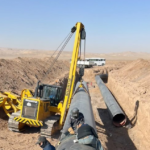
According to the latest available information, out of the 150 kilometers of the TAPI pipeline planned to pass through Afghan territory, 142.9 kilometers have so far been laid and welded. This means that approximately 92 percent of the construction work has been completed, with only a relatively short section remaining. These figures demonstrate the considerable progress made on the project and indicate that it is moving closer to completion. Such progress on a project of this scale reflects the joint efforts, commitment, and dedication of the relevant institutions, technical teams, and workers.
The importance of the TAPI project is not limited to laying the pipeline. The construction of essential technical facilities and the establishment of a complete system for gas transportation are equally important. In this regard, construction work on the gas receiving and regulating facility and the gas metering station in Guzara District of Herat Province has reached approximately 55 percent completion. Furthermore, hydrostatic testing has been completed on around 70 kilometers of the installed pipeline, while testing of the remaining sections is underway at various stages. The installation of valves along the pipeline route and the construction of crossings have also been completed. These developments demonstrate that both the technical and construction components of the project are progressing steadily.
The completion of this project will bring numerous positive outcomes for Afghanistan’s economic development. First and foremost, it will create an important source of transit revenue for the country. Through the transportation of natural gas, Afghanistan will become a significant regional energy corridor, creating greater opportunities for economic activities along the pipeline route. These revenues could play an important role in supporting infrastructure development, public services, and other national economic projects.
On the other hand, the TAPI project is also significant in terms of employment generation. Construction, technical operations, maintenance, repair, and related services will create employment opportunities for Afghan workers and professionals. In addition, the project is expected to stimulate activities in transportation, trade, construction materials, logistics, and other service sectors. Such developments can positively affect people’s livelihoods and contribute to greater economic activity across the country.
Another major benefit of the TAPI project is its potential to help address Afghanistan’s energy needs. The country requires reliable and affordable energy to support economic activities and industrial development. Access to natural gas could create new opportunities for households, businesses, and industrial consumers. In particular, supplying gas to manufacturing facilities and industrial centers could reduce production costs, encourage business expansion, and create more favorable conditions for investment.
In this context, the development of an internal gas distribution network in Herat City is also of particular importance. According to available information, the assessment of routes for subsidiary pipelines and related facilities for the city’s gas distribution and regulation network has been completed. Efforts are underway to begin the actual construction work soon. Once this network is successfully developed and operational, the benefits of the TAPI project will extend beyond transit revenues, allowing residents of Herat, commercial centers, and industrial sectors to benefit directly from natural gas supplies.
From an economic perspective, TAPI also represents an important opportunity to strengthen mutual interests and cooperation between Afghanistan and other countries in the region. The successful implementation of this project will enhance economic relations among Turkmenistan, Afghanistan, Pakistan, and India, opening a new chapter in regional energy cooperation. When countries become connected through joint economic projects, opportunities for mutual trust, stability, and sustainable cooperation also increase. Afghanistan can further strengthen its position as a major transit country and regional economic partner.
The joint efforts of the Ministry of Mines and Petroleum and TAPI Pipeline Company Limited have played an important role in advancing the project. Both parties are working to complete the remaining activities according to the established schedule by the end of the current calendar year. This commitment must continue until all technical and construction activities are successfully completed, ensuring that the benefits of this major regional project are delivered to the Afghan people and economy.
However, alongside completing the TAPI project, it is equally important to develop effective plans to maximize its economic benefits. Expanding the domestic gas distribution network, addressing the energy needs of industrial centers, training Afghan specialists, and creating employment opportunities are among the key areas that deserve special attention. Moreover, compliance with quality, safety, and environmental standards will ensure that the project operates safely and efficiently in the long term.
Overall, the completion of 92 percent of the construction work on the TAPI project represents a positive and promising development for Afghanistan’s economic progress and regional connectivity. It demonstrates that Afghanistan has the capacity to implement major economic projects and can play an effective role in strengthening cooperation among regional countries. There is now an important opportunity to complete the remaining work successfully and make effective use of the project’s economic potential for the country’s development.
TAPI is much more than a natural gas pipeline. It is an important instrument for economic growth, employment generation, energy development, trade, and regional cooperation. The successful completion of this project will provide Afghanistan with an opportunity to use its strategic geographical position for the benefit of its people and national economy. Therefore, completing the remaining stages of TAPI and expanding its practical benefits should remain among Afghanistan’s key economic priorities.