


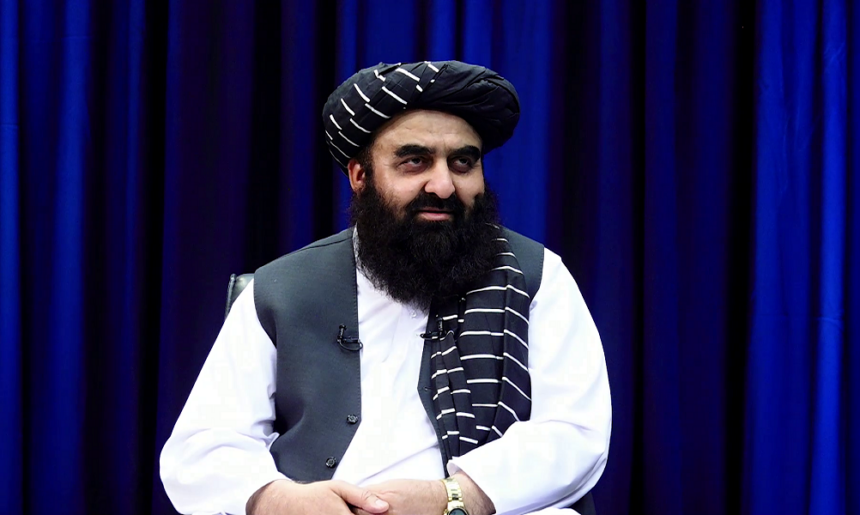
Amir Khan Muttaqi, the Foreign Minister of the Islamic Emirate of Afghanistan (IEA), has described Pakistan’s policy towards Afghanistan as unreasonable and unsuccessful, saying the IEA seeks negotiations and an end to tensions, but Pakistan is obstructing the process.
Speaking in a special debate on Ariana News, Muttaqi rejected Pakistan’s allegations that the Tehrik-i-Taliban Pakistan (TTP) operates from Afghan territory and called on Islamabad to reconsider its policies towards Afghanistan.
“I believe Pakistan’s policy towards Afghanistan has been unsuccessful. It has been a failed approach. Afghanistan’s history has shown that no one has ever been able to impose their will on the country by force. Afghans have never bowed to pressure. They have sacrificed their lives, but they have never surrendered. The policies pursued by previous invaders failed, and such policies should not be repeated,” Muttaqi said.
The foreign minister also highlighted what he described as the IEA’s diplomatic achievements over the past five years, saying its relations with other countries had expanded and that IEA has more than 40 diplomatic missions, including embassies and consulates, in different parts of the world.
Addressing relations with the United States, Muttaqi said that Washington’s actions after the IEA takeover of Afghanistan had not created serious problems for the IEA.
“The 20-year war was a very bitter experience. Looking at world history, governments that come to power through revolutions and prolonged struggles naturally face obstacles. However, the US has not taken any actions that have caused us serious problems. We have also expressed a positive position and want to establish positive relations,” he said.
Muttaqi also said that the military equipment left behind by US forces now belong to Afghanistan , saying it was being used for the country’s defence.
On women’s rights, the foreign minister said women’s education was not a crime, but that the absence of women from the cabinet was part of the government’s policy.
“This is a matter of government policy and how governments choose to organise themselves. This does not mean that women’s voices are not heard or that healthcare and other facilities are not provided to them,” he said.
Muttaqi further maintained that the IEA’s doors remained open to everyone, that its general amnesty was still in effect, and that the entire country was under its control.
Commenting on armed opposition groups, he claimed that their activities were limited to social media and that no such group had a physical presence on Afghan territory.
He also dismissed concerns raised by some regional countries, including Tajikistan, about the presence of Daesh in Afghanistan, saying that combating the group required serious and joint efforts by countries across the region.