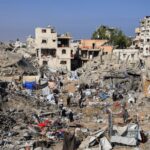
The killing of thousands of people during recent protests in Iran is a deeply alarming and painful humanitarian tragedy. This is not merely a domestic crisis of one country; it is part of a broader pattern in which the blood of ordinary people is sacrificed for the political calculations of powerful states. When legitimate public demands are answered with bullets and repression, serious questions arise about global claims of human rights, justice, and moral responsibility.
History clearly shows that the United States has never had a sincere plan for Iran’s freedom, prosperity, or genuine development. America’s long-term strategy is centered on preserving its global dominance, and for that reason it does not want strong, independent, and self-reliant countries to emerge in Asia—countries that could stand alongside Russia and China and challenge the existing unipolar world order. Washington understands well that powerful nations threaten its hegemony. As a result, instead of supporting development, it consistently pursues policies aimed at weakening countries, fragmenting societies, and keeping nations trapped in perpetual instability.
The examples of China and Russia clearly expose this reality. For years, the United States has attempted to contain China through economic pressure, trade wars, technological restrictions, and political confrontation, because China has become a serious rival in terms of economic power, technology, and global influence. Likewise, Russia has been subjected to relentless pressure through NATO expansion, sanctions, proxy conflicts, and direct and indirect confrontations—simply because it refuses to submit to American dictates and insists on acting as an independent global power. These two cases clearly demonstrate that the United States does not accept strong and sovereign nations; it prefers smaller, weaker states that obey its commands.
Iran has also been placed within this same framework. The Iran desired by Washington is not one that enjoys stability, industrial growth, national dignity, and independent decision-making. Instead, it seeks an Iran weakened from within, economically exhausted, socially divided, and permanently under pressure—an Iran eventually forced to surrender to external dictates. This is why the suffering of the Iranian people is repeatedly exploited as a political pressure tool rather than addressed through genuine solutions.
At the same time, it must be stated clearly that the primary responsibility for any country’s future rests with its own governing system. When people’s demands are ignored, dialogue is shut down, and force replaces reason, violence intensifies and crises deepen. The killing of thousands of citizens—under any justification—is neither acceptable nor defensible. Such actions do not bring stability or legitimacy; instead, they widen wounds and push societies toward darker futures.
The Iranian people must remain vigilant and learn from history. Foreign powers—especially the United States—have repeatedly used popular grievances to advance their own agendas, only to abandon nations once their interests are secured. Iran’s future will not be written in Washington or any other foreign capital; it can only be shaped by the awareness, unity, and national wisdom of the Iranian people themselves.
The United States must also recognize that the policy of weakening nations is no longer acceptable in today’s world. The global landscape is changing, societies are more aware, and nations no longer wish to be pawns on someone else’s chessboard. If America truly believes in human rights, freedom, and development, it must respect national sovereignty instead of turning human blood into a political bargaining tool.
Today, Iran stands at a critical historical crossroads. Either the cycle of violence, internal repression, and external pressure will continue, or a new path—based on reason, reform, and national reconciliation—will be chosen. History has repeatedly shown that force is never a lasting solution. Suppressed nations eventually rise, and the blood of thousands must never become the price of political games. Nations endure, but the hidden agendas of powerful states inevitably come to an end.
Iran’s Bloodshed, America’s Hidden Agenda, and the Strategy of Weakening Nations



Leave a Comment