


Herat, in western Afghanistan, is not merely a historic and cultural city; the province is rapidly moving toward becoming an important industrial, commercial, and transit center of the country. In this transformation, the supply of energy, particularly the development and distribution of natural gas, is of particular importance.
The Turkmenistan-Afghanistan-Pakistan-India, or TAPI, project is not merely a gas transmission project for Afghanistan; it is a major opportunity for the development of energy, industry, investment, employment, and regional connectivity. In particular, the arrival of TAPI gas in Herat and the extension of branch pipelines from the main route toward industrial and residential areas could fundamentally transform the province’s economic structure.
The area in Zindajan district, approximately 30 kilometers from Herat city, where the first TAPI off-take station and gas regulation and distribution facilities are being established, could become an important center for Herat’s future energy distribution network. From this location, a branch pipeline approximately 20 inches in diameter and 28 kilometers in length will supply the existing industrial park, residential areas, and CNG production facilities. This represents an important change in Herat’s energy landscape.
Likewise, the plan to extend gas supplies to the new industrial park in the same area and to the planned 3,000-megawatt power plant to be developed by Azizi Energy demonstrates that Herat’s future economic outlook is far greater than its current situation.
Herat’s existing industrial park is a clear example of the province’s economic dynamism. It has around 1,400 active manufacturing factories, with hundreds of trucks transporting products from the park every day. What is particularly notable is that the industrial park is expanding so rapidly that land which only a few months ago had been considered for future facilities now already contains newly established factories, with more still under construction.
This situation sends a clear message: Herat urgently needs a reliable and extensive energy supply for the expansion of its industries. Natural gas can reduce the energy costs of manufacturing factories, increase production stability, and strengthen the competitiveness of domestic products. Expanded gas distribution will not only strengthen existing factories but could also encourage new investors to establish manufacturing units in Herat.
The benefits of TAPI should not be limited to industrial factories. The expansion of the gas distribution network could, in the future, also provide residential areas and households with access to safe and standardized natural gas supplies. The use of natural gas for cooking, heating, and other needs could reduce household energy costs and modernize the energy system of cities.
On the other hand, the availability of gas also presents a major opportunity for electricity generation. If large gas-fired power generation capacities are established in Herat, the province could become an important center of reliable energy for industry and commerce. In particular, the implementation of the planned 3,000-megawatt power plant could bring a significant change to the energy situation of Herat and even western Afghanistan.
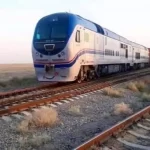
Another important component of Herat’s future economic transformation is the railway network. The development of the Herat-Iran, Herat-Turkmenistan, Herat-Mazar, and Herat-Kandahar railway routes could connect Herat with the western, northern, and southern parts of Afghanistan as well as with regional markets. When energy, industry, electricity, railways, and commercial routes come together in one region, an environment is created for investment and production whose impact extends far beyond a single province.
The true value of the TAPI project will not be measured merely by the arrival of gas; its real economic significance will become evident when new factories are established using this gas, existing factories expand, employment opportunities increase, households gain access to standardized energy, and products reach domestic and regional markets.
Therefore, alongside TAPI, serious attention must also be given to the internal gas distribution network. A well-organized, safe, and standardized distribution network serving the needs of industrial parks, factories, power plants, and residential areas is an essential component of the success of this major project.
Herat has significant potential for industry, commerce, and transit due to its geographic location, private sector, and market. If TAPI gas, industrial parks, electricity generation, railways, and private investment move forward in coordination, Herat can transform from an important industrial city of Afghanistan into a major commercial, industrial, energy, and transit hub of the region.
TAPI is a gas pipeline, but for Herat, its meaning is far greater than a pipeline; it is an opportunity to create a new economic artery for production, industry, employment, commerce, and economic development.