



Afghanistan is experiencing a new phase of economic growth and investment after emerging from a difficult period of prolonged wars. With the improvement in the security situation, the expansion of trade and economic activities, and the country’s abundant natural resources, an opportunity has now emerged for Afghanistan to become an important market for major domestic and foreign investments.
The most important issue for Afghanistan’s economic future is to make effective economic use of the opportunity created by improved security. Security demonstrates its full value when it is accompanied by investment, production, employment, and economic growth. Compared with previous years, the current situation in the country provides investors with a relatively stable environment for business activities, and this opportunity should be transformed into serious economic projects.
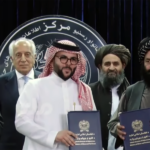
In this context, the recent agreements between Saudi Arabia’s Delta Energy and Afghanistan’s Ministry of Mines and Petroleum represent a significant development. Under these agreements, in addition to the exploration and assessment of hydrocarbons in the extensive Kashk and Tirpul areas of Herat, studies will also be conducted on the use of natural gas and the development of energy infrastructure.
An important component of these agreements is the assessment of a proposed gas pipeline of approximately 700 kilometers, known as the “CentGas: Corridor of Prosperity.” If the project is found to be technically and economically viable, it could connect Afghanistan’s energy resources with domestic and regional markets and play an important role in strengthening the country’s regional connectivity.
However, the significance of these agreements goes beyond the potential investment itself. Their important message is that international companies are once again looking at Afghanistan’s energy and natural resources market. This is a positive development for building investor confidence.
Zalmay Khalilzad, the former U.S. Special Representative for Afghanistan, has also described Afghanistan as becoming ready to attract major international investments and welcomed the agreement reached with the Saudi company. In his view, in addition to its abundant natural resources, Afghanistan has a geographical position that could enable it to play an important role in trade and energy between Central and South Asia.
In reality, Afghanistan’s investment opportunities are not limited to the oil and gas sector. The country’s mining, agriculture, energy, transit, industry, construction, telecommunications, logistics, and services sectors all have significant potential for large-scale investment.
Afghanistan has considerable potential in copper, iron, lithium, and other mineral resources. If these resources are extracted and processed professionally, transparently, and economically, the country can not only increase export revenues but also establish new processing and manufacturing industries alongside the mining sector.
Agriculture is also an important source of economic growth for Afghanistan. The country has the capacity to produce fruits, dried fruits, saffron, vegetables, and other agricultural products. However, investment in cold storage facilities, modern packaging, processing, irrigation, and export infrastructure could multiply the value of this sector.
Afghanistan also has significant opportunities in the energy sector. Electricity generation from hydropower, solar, and wind resources, the expansion of industrial parks, and energy-related infrastructure can provide a foundation for long-term activity by domestic and foreign investors.
Beyond these opportunities, Afghanistan’s most important economic advantage is its geographical position at the heart of the region. Afghanistan is a natural connecting route between the energy and resources of Central Asia and the large markets of South Asia. If investment in transit, railways, roads, energy, and logistics expands, Afghanistan could become an important center for regional trade and transit.
However, security alone is not sufficient to realize these opportunities. Maintaining investor confidence also requires clear laws, assurances regarding the enforcement of contracts, simplified administrative procedures, measures to prevent corruption, appropriate tax and customs incentives, and guarantees for the protection of investments.
Domestic investment is also of particular importance in this regard. Afghan businesses and investors are familiar with the country’s market and needs and can play an important role in strengthening the economy. The expansion of domestic investment would not only increase production, employment, and revenues but would also create greater confidence among foreign investors.
Foreign investment, meanwhile, can bring new technologies, international experience, financial resources, and access to global markets. A combined movement of domestic and foreign investment could help shift Afghanistan’s economy from an import-dependent and consumption-based structure toward production, exports, and regional economic connectivity.
Afghanistan today has an important opportunity for its economic future. The strengthening of security, natural resources, a young workforce, a growing market, and a strategic geographical position are elements that, if properly combined, can provide a strong foundation for the country’s economic transformation.
The recent agreements with Saudi Arabia’s Delta Energy should be viewed as part of this broader economic opportunity. The success of such projects would not only increase investment in a particular sector but would also send a message to other international and domestic companies that Afghanistan offers significant opportunities for economic activity.
After decades of conflict, Afghanistan needs economic growth, employment, and production. The development of the country’s natural resources, expansion of industry, modernization of agriculture, energy generation, and strengthening of regional connectivity could create employment and income opportunities for millions of Afghans.
The current security stability is not merely a security opportunity for Afghanistan; it is also an economic opportunity. If this opportunity is accompanied by sound economic policies, investor confidence, and transparent governance, Afghanistan can secure an appropriate position in the regional competition for investment.
For Afghanistan, the time has come to use its economic potential to speak to the world in the language of investment, trade, and economic partnership rather than dependence on assistance. The country’s natural resources, strategic location, and current security situation provide an opportunity for Afghanistan to begin a new and promising phase of economic growth.