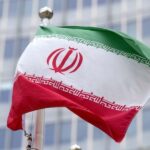



In today’s rapidly shifting geopolitical landscape, certain events cannot be viewed merely as domestic issues of a single country; rather, they signal potential transformations in the global balance of power. The scenario of Tehran’s possible fall is one such development. Its consequences would not remain confined within Iran’s borders but would profoundly affect the security, economic stability, and strategic structure of the entire region. This issue must therefore be analyzed not through emotional reactions, but through the lens of regional balance and long-term stability.
Tehran is not simply a national capital; it represents a central pillar in West Asia’s geopolitical equation. Any serious destabilization or collapse of this city would create a strategic vacuum difficult to fill. History demonstrates that whenever a major state structure in the region has weakened, the result has not been stability but prolonged chaos, proxy conflicts, and intensified geopolitical rivalries. Iraq, Libya, and Syria remain clear examples of how power vacuums generate long-lasting instability rather than peace.
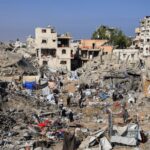
If Tehran were to face severe pressure or a military scenario, the resulting wave of instability would extend far beyond Iran itself. Global energy markets, regional trade corridors, security arrangements, and even the strategic calculations of major powers would be directly affected. The delicate balance linking the Persian Gulf, Central Asia, and South Asia would face unprecedented strain, posing risks not only to regional peace but also to the global economy.
China and Russia, in particular, should not interpret such developments as merely a regional confrontation. The potential fall of Tehran would weaken key geopolitical corridors upon which energy flows, commercial routes, and the emerging multipolar global order depend. Energy security, Eurasian economic connectivity, and long-term strategic cooperation frameworks would all face serious disruption. For Beijing and Moscow, therefore, Iran’s stability is not only a political concern but an economic and strategic necessity.
Regional history has repeatedly shown that external military pressure and regime-change policies rarely produce stability. Instead, they often create prolonged crises marked by institutional collapse, extremism, and insecurity. Afghanistan itself stands as a living example of this reality. Decades of war, intervention, and imposed conflict demonstrated that warfare does not resolve crises—it multiplies them.
At a time when the language of force is once again gaining prominence, regional nations must avoid repeating past mistakes. The expansion of war does not destroy only one geography; it erodes trust, disrupts economic progress, and pushes entire societies toward long-term uncertainty. Any large-scale military escalation against Tehran would, in essence, represent an assault on regional stability itself.
Current international dynamics also suggest that certain foreign policy approaches continue to rely heavily on pressure, sanctions, and military leverage. The doctrine of regime change, tested repeatedly over recent decades, has failed to deliver sustainable peace while contributing to new cycles of instability. Regional populations increasingly recognize that wars rarely guarantee security.
Simultaneously, intensifying regional rivalries and the use of proxy actors represent a dangerous trajectory that deepens mistrust among nations. Such strategies transform regions into arenas of continuous confrontation, undermining opportunities for collective development and cooperation. Without prioritizing dialogue over confrontation, the region risks remaining trapped in recurring crises.
Regional powers—especially China and Russia—must therefore play a proactive diplomatic role aimed at preventing escalation and strengthening political solutions. Preventing crises is far more valuable than attempting to manage their aftermath. The stability of Tehran is not solely Iran’s issue; it is tied to a broader geopolitical chain stretching from Central Asia to the Middle East and onward to global markets.
If Tehran were to fall, there is little reason to believe instability would end there. History suggests that geopolitical vacuums invite further competition and expansion of influence. New rivalries would emerge, and additional countries could become future targets of strategic pressure. Defending stability today is, in reality, preventing tomorrow’s conflicts.
Afghanistan, having paid a heavy price through decades of war, understands the true cost of imposed conflicts. Its experience highlights the importance of advocating peace, dialogue, and regional cooperation over confrontation. The collective responsibility of regional nations is to promote mutual respect, balanced cooperation, and sustainable stability.
The potential fall of Tehran would benefit no country—neither from a security perspective, nor economically, nor strategically. Instead, it would open the door to prolonged instability across the region. The future of regional peace depends on prioritizing stability, cooperation, and diplomatic engagement over military escalation.
May the peoples of the region be protected from war and catastrophe, for they carry the heavy legacy of history, resilience, and hope for future generations.