


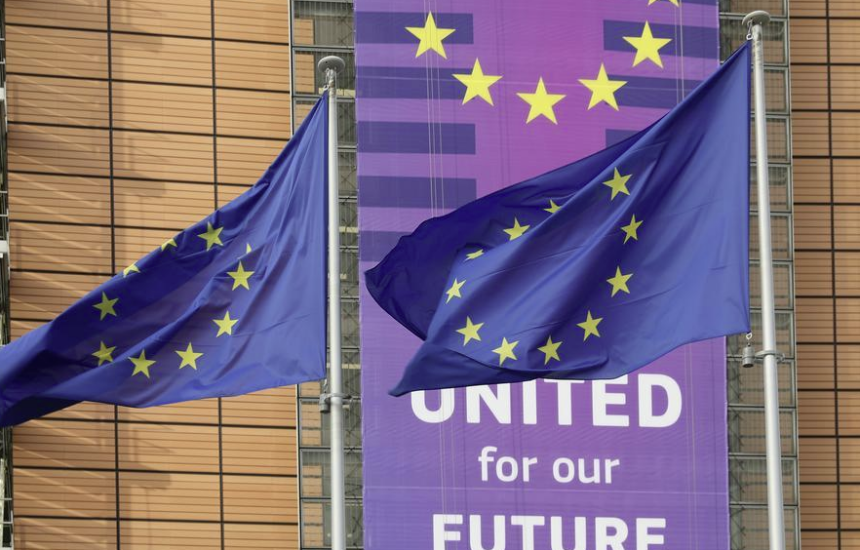
Europe’s strategic vulnerability became starkly visible in 2025 as three crises converged — a disruptive shift in transatlantic relations under “Trump 2.0,” mounting insecurity from the protracted Russia-Ukraine conflict, and persistent governance paralysis inside the EU that repeatedly obstructed collective action.
In a rapidly changing global environment, an internally divided Europe, lacking consensus, political will, and operational capacity, faces mounting pressure. Prospects for restoring economic competitiveness or achieving comprehensive rearmament remain dim.

SHIFT IN THE TRANSATLANTIC ALLIANCE
The inauguration of the new Trump administration ended the “honeymoon” of U.S.-European cooperation. Almost immediately, Washington reshaped the transatlantic ties around an uncompromising “America First” doctrine. Europe was confronted with a barrage of unilateral U.S. demands: sweeping tariff threats, renewed talk of “purchasing Greenland,” pressure to drastically increase defense spending, and the use of steel and aluminum duties to coerce the EU into loosening digital regulations.
The December 2025 U.S. National Security Strategy (NSS) solidified this ideological rift. The document warned of Europe’s supposed “civilizational erasure” due to low birth rates and migration, accused the EU of undermining “political freedom and sovereignty,” and questioned the reliability of certain European allies. Notably, it asserted that the United States aimed to “help Europe correct its current development trajectory,” a statement interpreted by European media as a license for interference in EU elections and domestic politics.

Most consequential was Washington’s decision to scale back its security commitments to Europe. At the NATO Summit in The Hague, EU member states, despite high debt and fiscal strain, were pushed to commit to raising defense spending to 5 percent of GDP by 2035. The Trump administration halted full military support for Kyiv and demanded that European countries finance U.S. aid instead. Europeans were further shocked by Trump’s perceived favoritism toward Russia during peace negotiations, where Europe was conspicuously sidelined.
Fearful of antagonizing Washington while facing an increasingly assertive Russia, Europe showed signs of what observers described as “self-vassalization.” The EU made sweeping concessions in trade talks, producing an agreement that European Parliament Vice-Chair Kathleen Van Brempt denounced as “neither fair nor balanced.”
“With the U.S. administration increasingly taking on the role of unreliable broker over a staunch ally, Europe is in a parlous position,” said British political commentator John Kampfner.