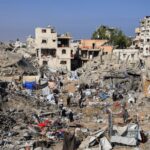
Pakistan’s recent airstrikes on Afghan soil are not merely a military action; they carry a deep political and strategic message. These attacks come at a time when Afghanistan, after decades of war, is gradually moving toward relative stability and internal consolidation. In such sensitive circumstances, bombing civilian areas—particularly during the holy month of Ramadan—is an act that contradicts both international norms and Islamic values.
The moral dimension of this incident is profoundly serious. Ramadan is a month of patience, restraint, and spiritual devotion. Launching attacks on defenseless families and causing civilian casualties during this sacred time stands in clear violation of basic human and religious principles. Such actions intensify grief, anger, and mistrust among the people and widen the gap between the two nations.
From a strategic perspective, this approach also raises fundamental questions. Just days ago, Pakistan’s Defense Minister, Khawaja Muhammad Asif, openly stated that his country had been used “like toilet paper” by the United States over the past decades. This was not merely an emotional remark; it was an admission born out of long political experience. When a state publicly acknowledges that it has been a tool in the power rivalries of others, it is natural for people to ask: What guarantee exists that the same scenario is not being repeated today?
Any unilateral military action against Afghanistan—whether justified in the name of security or political pressure—ultimately undermines regional stability. Today, the region is moving toward economic corridors, trade routes, and energy projects. The connection between South and Central Asia can only be realized if countries choose dialogue over bombardment and cooperation over coercion.
If Pakistan genuinely seeks to avoid being “used” again by external powers, it must adopt an independent and responsible policy. Airstrikes on Afghan territory may appear to offer short-term political gains, but their long-term consequences will weigh heavily on the future of both nations. History has repeatedly shown that military pressure does not resolve political problems; it creates new crises.
The international community also carries responsibility. The principles of sovereignty and territorial integrity must be respected equally for all nations. If such principles are violated in one place and met with silence, it sets a dangerous precedent for others tomorrow. As an independent country, Afghanistan expects international law to be applied fairly and consistently.
The Afghan nation has a long and resilient history—one marked by endurance, resistance, and an unwavering defense of independence. Afghans have never remained indifferent when it comes to their land, honor, and sovereignty. Pressure only strengthens their sense of unity. However, our position must remain clear: any aggression should be confronted firmly through political, legal, and legitimate means, sending a clear message to the world that Afghanistan will defend its rights, yet does not seek the beginning of another era of instability.
In conclusion, it must be understood that Afghans do not forget. The determination to defend their homeland has always endured throughout history. Anyone who assumes that pressure on this nation will go unanswered should take lessons from the past. Honor, sovereignty, and the blood of innocent people are values that Afghans have never taken lightly—and never will.
Once Again at Someone Else’s Signal? Pakistan’s Repeated Strategic Mistake




Leave a Comment