


Iran has warned Britain and France against any foreign military activity in the Strait of Hormuz, after the two European powers said they were ready to support a multinational mission to protect freedom of navigation through one of the world’s most important energy corridors.
Kazem Gharibabadi, Iran’s deputy foreign minister for legal and international affairs, said on Saturday that Tehran opposed what he described as a military display by powers from outside the region. His comments came in response to a joint statement issued by British Prime Minister Keir Starmer and French President Emmanuel Macron on July 3.
“The Strait of Hormuz is not a stage for extra-regional powers to display military force,” Gharibabadi wrote on X, according to Anadolu Agency. He said Iran warned against “any military activity” in the waterway and added that security in Hormuz “rests with the littoral states.”
In their joint statement, Starmer and Macron described the Strait of Hormuz as a “vital artery for the global economy” and said restoring safe transit for ships of all nations was a matter of global concern. The statement said Oman had agreed to work with the United Kingdom and France to ensure that its sovereign territorial waters were safe for navigation. It also said Britain and France stood ready to deploy a wider multinational military mission to support freedom of navigation in the strait.
The British government has previously said the proposed mission would be defensive, independent and intended to support civilian shipping, reassure commercial operators and conduct mine-clearance operations when conditions allow. A May statement by the UK government said operations would only begin in a permissive environment and in accordance with international law and national constitutional requirements.
The exchange comes amid continuing tensions over maritime security following recent hostilities involving Iran, Israel and the United States. Reuters reported last week that Washington and Tehran had agreed to halt recent hostilities in the Gulf and renew talks related to the Strait of Hormuz, after both sides accused each other of violating an interim ceasefire. Reuters cited a U.S. official as saying technical talks would continue under a 14-point memorandum of understanding agreed on June 17, under which the strait would be reopened to traffic.
Details of the interim arrangement remain politically sensitive and should be treated with caution unless confirmed by the parties. Anadolu Agency reported that the memorandum entered into force on June 18 and included a framework for ending hostilities, reopening the strait, addressing sanctions, nuclear issues and broader regional security.
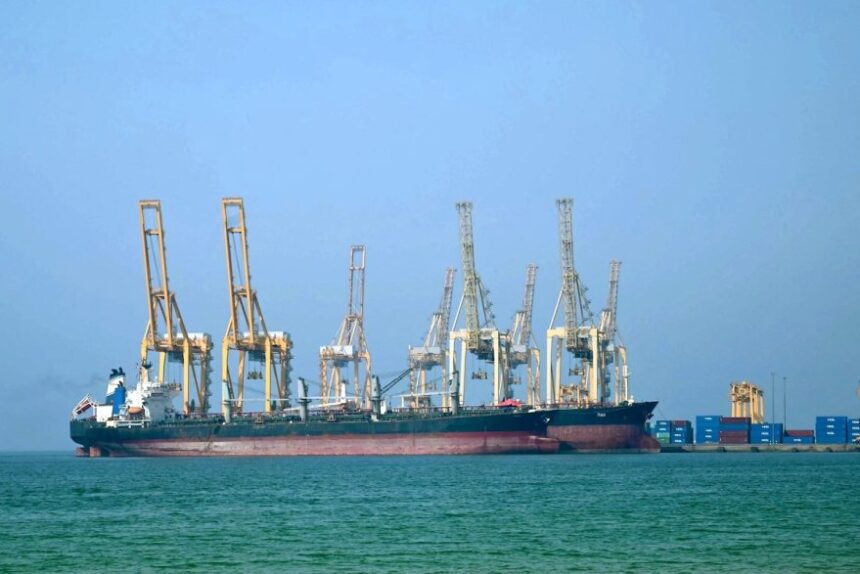
The Strait of Hormuz connects the Persian Gulf with the Gulf of Oman and the Arabian Sea. The U.S. Energy Information Administration said oil flows through the strait averaged about 20 million barrels per day in 2024, equivalent to roughly 20 percent of global petroleum liquids consumption. It also said the route accounted for more than one-quarter of global seaborne oil trade and around one-fifth of global liquefied natural gas trade.
Any renewed disruption would carry risks beyond energy markets. Reuters reported this week that the U.N. Conference on Trade and Development warned vulnerable economies could continue to face pressure from higher food, fuel, transport and fertilizer costs even after the reopening of the strait.
Iran has long argued that Gulf security should be managed by regional coastal states, while Western governments say international military cooperation is necessary to protect commercial shipping and uphold freedom of navigation. The latest dispute highlights how fragile the diplomatic track remains, even as governments seek to prevent another escalation in one of the world’s most sensitive maritime chokepoints.