



Relations between China and the United States are among the most important issues affecting the political and economic situation of the world. If the world’s two largest economies and major global powers maintain their relations based on understanding, cooperation, and mutual respect, the effects will not be limited to the people of the two countries; they will also have a positive impact on the global economy, trade, peace, and stability. Conversely, if differences between the two countries turn into continuous pressure, tariffs, and political criticism, the damage could also extend to the global economy and international stability.
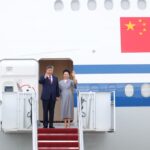
During his recent visit to Washington, Chinese President Xi Jinping delivered a clear message: China and the United States should be partners, not permanent competitors. According to him, there is no inherent conflict between China’s development and America’s revitalization, and the two countries can develop in parallel and cooperate on the basis of mutual benefit. This position shows that China seeks dialogue, cooperation, and stable relations rather than the expansion of differences.
Now, the role of the United States is also important in improving these relations. Washington should change its approach from confrontation, unwarranted criticism, and unilateral pressure toward dialogue and cooperation. Continued criticism of China and increases in trade tariffs not only weaken the atmosphere of trust between the two countries, but also create uncertainty for global trade and the world economy.
If the United States has concerns and disagreements with China, the most appropriate way to resolve them is through direct and constructive dialogue, rather than turning every disagreement into tariffs, sanctions, or political pressure. Differences between major countries are not surprising, but what matters is how those differences are managed. Dialogue based on mutual respect can help prevent misunderstandings and create conditions for advancing common interests.
The United States should also recognize that China’s economy is an important part of the global economy and that U.S. economic relations with China are not merely an issue between the two countries. Trade relations between China and the United States are connected to numerous countries around the world, global supply chains, and international markets. Therefore, any trade conflict between the two countries can also affect prices, trade, investment, and economic confidence in other parts of the world.
For this reason, the United States should prioritize practical negotiations to resolve trade issues on the basis of mutual benefit rather than resorting to higher tariffs and increased pressure. A tariff war cannot guarantee lasting economic stability for either side; however, balanced trade relations and continued dialogue to resolve differences can strengthen confidence between the two countries and in the global economy.
China and the United States are not merely two countries; their relationship has an impact on the future of the world. The need for cooperation between the two countries on major global issues such as climate change, artificial intelligence, international trade, economic growth, and regional conflicts is growing day by day. In such circumstances, what the world needs is not the emergence of new economic and political blocs, but greater responsible cooperation among the major powers.
China has made its position clear: it seeks stable relations with the United States based on mutual respect, peaceful coexistence, cooperation, and mutual benefit. Now it is important for the United States to also change its approach, refrain from unwarranted criticism and unilateral pressure, and choose the path of dialogue and cooperation instead of continuously increasing tariffs.
Good relations between China and the United States are not only in the interests of Beijing and Washington; they are in the interests of the entire world. If the United States corrects its approach, gives priority to dialogue over pressure and mutual benefit over tariffs, it will take an important step toward rebuilding trust between the two countries and strengthening global economic stability.