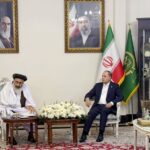



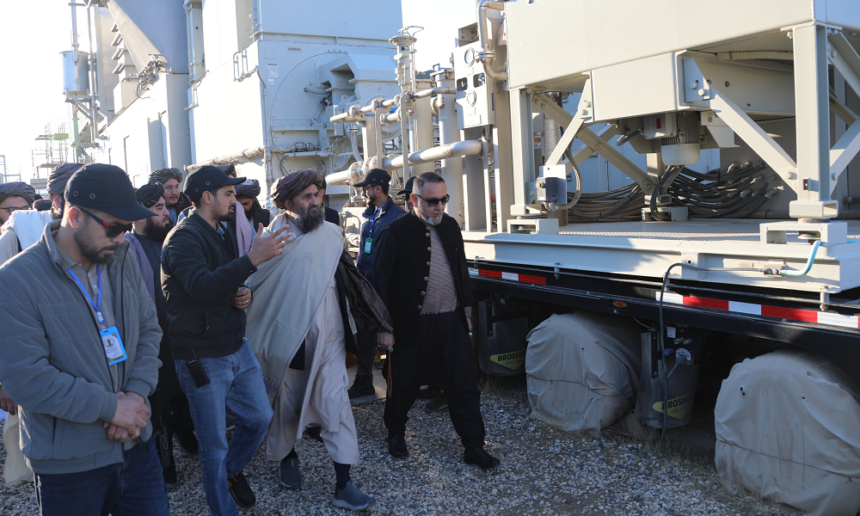
Bayat Power’s 40-megawatt gas-fired electricity turbine has resumed operations in Jawzjan province following an inauguration ceremony attended by Mullah Abdul Ghani Baradar Akhund, Deputy Prime Minister for Economic Affairs, on Saturday.
The resumption marks an important step in Afghanistan’s efforts to strengthen domestic electricity production, reduce reliance on imported power and improve energy security.
During the ceremony, Mullah Baradar praised Bayat Power’s investment in gas-fired electricity generation and encouraged other investors to support the country’s energy sector and wider economy.
He said the Islamic Emirate of Afghanistan had taken significant steps towards economic growth and industrialization, creating favorable opportunities for investment. He also urged investors and industrialists to contribute to reconstruction, economic development and job creation.
Bayat Power’s return to operation comes amid a series of long-term agreements aimed at securing the future of domestic electricity generation. In May, the company extended its power production agreement with the Ministry of Energy and Water for another 10 years, guaranteeing the continued generation of 40 megawatts from domestic natural gas resources in Jawzjan.
The agreement was signed by Bayat Power CEO Ali Kasemi and Minister of Energy and Water Mawlavi Mohammad Younus Akhundzada. It followed a separate 10-year extension of the company’s natural gas supply agreement with Afghan Gas in April and an earlier power production and distribution agreement with Da Afghanistan Breshna Sherkat (DABS).
Bayat Power operates Bayat Power-1, Afghanistan’s first modern gas-to-electricity plant, which uses Siemens Energy’s SGT-A45 mobile gas turbine technology. The facility has the capacity to generate more than 300 million kilowatt-hours of electricity annually, supplying hundreds of thousands of consumers.
The company is Afghanistan’s largest private electricity producer, and its operations form part of broader efforts to expand domestic energy infrastructure and reduce dependence on electricity imports.
The resumption of the turbine is expected to reinforce the country’s local power supply while highlighting the role of private investment in Afghanistan’s energy development.