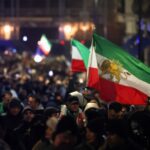
The protests and demonstrations currently unfolding in Iran, although reflecting certain social grievances and public dissatisfaction, are unlikely to lead to any meaningful political transformation, stability, or genuine public welfare. History and contemporary global realities clearly demonstrate that movements shaped or exploited by external powers rarely result in sustainable change. Instead, they often push countries further toward weakness, isolation, and prolonged instability.
At the center of this issue lies the well-known approach of the United States toward Iran. Washington has neither a sincere plan nor a proven strategy aimed at bringing prosperity, freedom, or long-term stability to the Iranian people. Rather, its policy is rooted in sanctions, political pressure, economic suffocation, and international isolation. The primary objective is not the well-being of ordinary Iranians, but the systematic weakening of Iran as an independent and influential regional actor.
Those Iranians—whether inside the country or living abroad—who place their hopes in American intervention or support are making a serious miscalculation. The United States today does not possess a credible humanitarian legacy that proves it can deliver peace, prosperity, or democratic stability to nations it interferes in. On the contrary, recent decades provide overwhelming evidence that American involvement often leaves behind fractured societies, destroyed economies, and long-term insecurity.
The case of Ukraine stands as a stark example. Turned into a battleground of great-power rivalry, the country now faces a prolonged war, massive destruction, millions of displaced civilians, and an uncertain future. Despite lofty promises of security and support, the Ukrainian people have paid the heaviest price, while geopolitical interests continue to dominate decision-making.
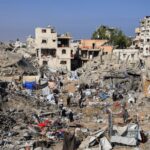
Similarly, Iraq remains one of the clearest illustrations of the consequences of American intervention. Under the banner of “bringing democracy,” the U.S. invasion dismantled state institutions, fueled sectarian conflict, empowered extremist groups, and plunged the country into years of chaos. Decades later, Iraq is still struggling to recover from the deep political, economic, and social wounds inflicted during that period.
Afghanistan offers perhaps the most painful and revealing lesson. After twenty years of military presence, trillions of dollars spent, and countless promises of nation-building, the result was a fragile economy, weakened institutions, widespread disillusionment, and an abrupt withdrawal that left the country facing severe challenges. The rhetoric of stability and development ultimately proved hollow, as the Afghan people were left to confront the consequences alone.
Taken together, these examples highlight a consistent pattern: American interventions are driven primarily by strategic, economic, and geopolitical interests, not by a genuine commitment to the welfare of nations or their populations. Countries that become arenas for such policies often experience prolonged instability rather than progress.
Iran is no exception to this pattern. The United States does not seek a strong, stable, and self-reliant Iran. Instead, it aims to maintain pressure through sanctions, diplomatic isolation, and indirect encouragement of internal unrest. While protests may originate from real domestic concerns, when they are entangled with foreign agendas, they tend to deepen crises rather than resolve them.
The essential lesson for the Iranian people is clear: lasting reform and meaningful change cannot be imported from abroad. No external power—especially one with a record of destabilization—can deliver dignity, prosperity, or sovereignty to another nation. Genuine progress can only emerge from within, through national dialogue, rational policymaking, internal reforms, and a shared sense of responsibility for the country’s future.
In conclusion, if current protests are shaped by external calculations, they will not produce positive outcomes. Instead, they risk further isolating Iran, weakening its economy, and burdening its people with additional hardships. The experiences of recent decades should serve as a warning not only to Iranians, but to all nations in the region: the United States is not an exporter of stability or prosperity. More often, it has been a catalyst for division, fragility, and prolonged uncertainty. Only national wisdom and independent decision-making can protect societies from repeating these costly and tragic cycles.
America’s Empty Promises: Iran’s Protests and a Repeated Scenario of Instability


Leave a Comment