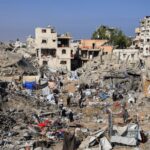
The world is now witnessing the beginning of a dangerous new phase in global politics. What previously existed in the form of political pressure, proxy conflicts, and indirect confrontations has now evolved into a direct military confrontation between Iran and the United States. Following recent missile strikes and retaliatory operations, the Middle East is effectively under fire. Iran has launched attacks, strikes have also targeted Iranian territory, and flames burning across Israel signal the alarming expansion of a regional war.
The security situation across the region has reached an unprecedented level of tension. Cities remain on alert, military forces are operating at heightened readiness, and global markets are shaking under the fear of escalation. This crisis did not emerge overnight; rather, it is the outcome of long-standing policies rooted in pressure, sanctions, military presence, and confrontation. Today, those accumulated tensions have crossed into open conflict.
For decades, U.S. policy in the Middle East has relied more on strategic confrontation than on balanced diplomacy. Economic sanctions, military alliances, and persistent threats gradually pushed the region toward an inevitable breaking point. Now, with both Iran and Israel experiencing direct attacks and the United States appearing increasingly involved, the region faces the real possibility of a large-scale war.
This new phase of conflict is not merely a dispute between states; it threatens the entire security architecture of the Middle East. Every strike invites retaliation, every retaliation generates a new crisis, and the cycle rapidly moves beyond political control. Energy routes, global trade, and regional stability are all at serious risk.
The fires burning in Israel and the attacks on Iranian territory demonstrate that the confrontation has moved beyond symbolic messaging into military reality. Wars are often easy to begin but extraordinarily difficult to end. History repeatedly shows that once major powers enter direct confrontation, conflicts evolve beyond initial calculations and produce unpredictable consequences.
Washington may view this escalation as a continuation of strategic pressure, yet past experience suggests that prolonged wars ultimately impose heavy costs on those who initiate or expand them. Afghanistan and Iraq stand as clear reminders that military superiority does not guarantee political success. The current crisis is even more complex: regional actors are stronger, the international system has become multipolar, and the effects of conflict spread globally at unprecedented speed.
One of the greatest dangers lies in the shrinking space for control. If escalation continues, the conflict may draw multiple countries into the confrontation, intentionally or otherwise. Such a development could disrupt global energy markets, destabilize economies, and trigger a broader international security crisis.
War also deepens resentment and shapes future generations through trauma and instability. Every missile strike, every destroyed city, and every displaced family pushes the prospects of peace further away. The Middle East, already burdened by decades of conflict, cannot endure another prolonged war without severe consequences for regional and global stability alike.
If the United States continues along this path, it risks becoming trapped in a conflict from which withdrawal will be far more difficult than entry. Once war expands, outcomes no longer follow strategic plans. The fire now burning across the Middle East could ultimately shake the foundations of global security and impose political, economic, and strategic costs on America itself.
The world today needs rational decision-making, not further militarization. The people of the Middle East seek stability, development, and cooperation, yet great-power rivalries continue to transform the region into a battlefield. If the current trajectory persists, history may once again prove that wars rarely produce lasting solutions.
Today, flames rise in Iran, in Israel, and across the wider Middle East. The question is no longer whether war has begun; the real question is how far it will spread and who will ultimately pay its heaviest price. History suggests a sobering answer: wars launched in moments of escalation often end far more painfully than their architects ever anticipate.
America Trapped in the Cycle of War: The Iran–U.S. Confrontation and a Middle East Set Ablaze



Leave a Comment