



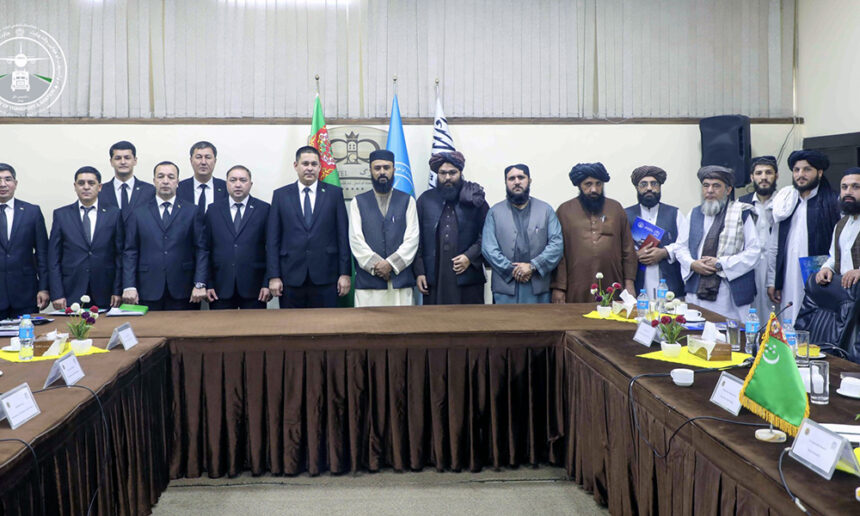
Afghanistan and Turkmenistan have agreed to establish a joint commission on road transport and facilitate transit between the two countries following two days of talks in Herat.
Afghanistan’s Ministry of Transport and Civil Aviation said the meeting brought together technical delegations from both countries to strengthen bilateral transport and transit cooperation.
The talks focused on easing visa procedures for Afghan and Turkmen drivers and traders, operationalising the Lapis Lazuli transit corridor and increasing the movement of transit vehicles between the two countries.
The sides also agreed to establish a joint commission to address road transport issues and improve coordination.
Representatives from Afghanistan’s ministries of foreign affairs, industry and commerce and the railway authority attended the talks, alongside the Ministry of Transport and Civil Aviation. Railway links, bilateral trade and wider transit cooperation were also discussed, with private-sector representatives expected to participate in future discussions.
The agreement comes as Turkmenistan works to strengthen its role as a regional transport and logistics hub, using its road, rail and Caspian Sea infrastructure to connect Central Asia with markets to the west and south.
A key part of that network is the International Seaport of Turkmenbashi, which links Turkmenistan with Azerbaijan and onward routes towards the South Caucasus and Europe.
Turkmenistan’s transport infrastructure also forms part of the wider Middle Corridor, or Trans-Caspian International Transport Route, connecting China and Central Asia with Azerbaijan, Georgia and Türkiye before reaching European markets.
For Afghanistan, the Lapis Lazuli Corridor is particularly important. It connects Afghanistan through Turkmenistan and across the Caspian Sea to Azerbaijan, Georgia and Türkiye, providing a potential route towards European markets.
Rail links such as the Herat-Torghundi line could further connect Afghanistan’s markets with Turkmenistan’s wider transport network.
The latest agreement puts road transport and transit facilitation at the centre of efforts by the two neighbours to expand trade and strengthen regional connectivity.