


A country’s true strength in international politics is not measured solely by its military power, economic wealth or political rhetoric. It is also measured by how nations around the world perceive that country and how much confidence they place in it. A new survey by the Pew Research Center indicates that the balance of global trust is gradually shifting toward China.
The survey was conducted among 42,151 adults between February 8 and May 13, 2026. Of the 36 countries in which views of China and the United States were compared, people in 25 held a more favorable opinion of China. Even Canadians and Mexicans—America’s closest neighbors—now view China more positively than the United States. In Canada, 44 percent expressed a favorable opinion of China, compared with 33 percent who said the same about the United States.
This change is not accidental. After decades of war, political pressure, economic sanctions and foreign interference, nations are increasingly seeking international partners that help advance development, trade, infrastructure and economic stability—without attempting to impose their own political models.
The survey’s findings from 17 middle-income countries are particularly revealing. A median of 75 percent said the United States interferes in the affairs of other countries, compared with 45 percent who said the same about China. Across many of these nations, China is also viewed as a more reliable partner and as making a greater contribution to global peace and stability.
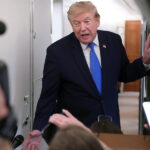
Although public confidence in both leaders remains generally low, Chinese President Xi Jinping received more favorable assessments than U.S. President Donald Trump in many surveyed countries. The difference was especially notable across several European nations. This suggests that the language of stability, mutual respect and economic cooperation is increasingly proving more effective than the language of threats and pressure.
The survey still gives the United States a relative advantage regarding respect for personal freedoms. However, even this gap is narrowing rapidly. Since 2021, the percentage of people who believe the U.S. government respects the personal freedoms of its citizens has declined in nearly every country surveyed. This demonstrates that international perceptions are no longer shaped by political slogans alone; they are increasingly influenced by the practical conduct of governments.
Afghanistan offers an important example within this changing international environment. The Afghan people have paid an enormous price for foreign interference, imposed political prescriptions and decades of war. China, by contrast, has pursued relations with Afghanistan based on respect for national sovereignty, political independence and non-interference.
Chinese cooperation in trade, mining, agriculture, transit and regional connectivity could help Afghanistan move from economic isolation toward regional growth. Kabul and Beijing should therefore continue strengthening their relationship on the foundations of mutual respect, transparency and long-term national interests.
The Pew survey carries a clear message: nations are tired of coercion and increasingly eager for cooperation. China is gaining favorable public opinion because it emphasizes trade over conflict, partnership over pressure and mutual respect over interference.
If China maintains this balanced approach and continues opening fair economic opportunities for countries such as Afghanistan, its growing international credibility will become even stronger. Leadership in the emerging global order will belong not to the power that inspires fear, but to the one in which nations can see a future built on friendship, cooperation and trust.