



By Yin Yeping
The US Department of Homeland Security (DHS) recently added 43 Chinese companies to its “Entity List” under the so-called “Uyghur Forced Labor Prevention Act” (UFLPA), with the move taking effect on Monday. The targeted companies include firms from industries such as snacks and dumplings, prompting Chinese netizens to mock the absurd logic behind this US politically motivated move.
The listing reflects the lack of factual basis, reliance on speculation and political bias, and the labeling of normal trade with political tags have gradually become the norm in US policy toward China, a Chinese expert noted, saying that Washington’s abuse of unilateral measures to exert economic coercion is a typical act of economic bullying.
Baffling moves
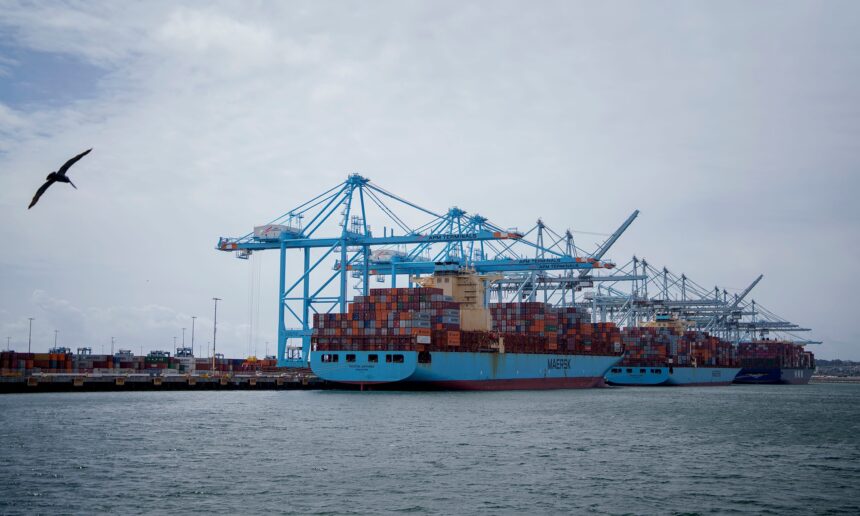
According to a press release posted on the US website, effective on Monday local time, US Customs and Border Protection will apply a rebuttable presumption that goods produced by these 43 entities are prohibited from entering the US as a result of the companies’ activities.
This move marks the single largest-ever expansion of the list since the act took effect in 2021, bringing the total number of entities on the list to 187, a 30 percent increase in the number of entities listed.
According to the Department of Homeland Security (DHS), the 43 new entities include companies in high-priority sectors for enforcement, including aluminum, apparel, copper, cotton, tomatoes and downstream products.
The US move drew immediate attention online, with many Chinese netizens expressing confusion over the politically motivated move, leading to comments that ranged from disbelief to mockery.
The targeted companies include Zhengzhou Synear Food Co., Ltd (Zhengzhou Synear), a food company located in Central China’s Henan Province that manufactures and distributes frozen food products, including dumplings, steamed buns, rice balls, wontons, and snack foods.
“Why Synear? Don’t they like sweet stuff?” one netizen asked, suggesting that the products could simply stop being sold there, as “good things should be kept for our own enjoyment.”
Another food company on the list is Chacha Food Company, based in East China’s Anhui Province. The company mainly produces popular snack products such as nuts and roasted seeds, with its products exported to nearly 50 countries and regions across Southeast Asia, Europe, the US and other markets.
The move has also drawn laughter from Chinese netizens, with one user named Momo asking, “Have some people in the US ever choked on sunflower seeds?” A netizen dubbed Martini said the listing showed that “the US has run out of cards to play.” Another user speculated that the list may have simply been generated by US officials using an AI tool to save time.
The US has repeatedly used so-called “forced labor” issues as a pretext to impose trade restrictions, reflecting a tendency to politicize economic and trade matters, Hu Qimu, a professor at the Maritime Silk Road Institute of Huaqiao University, told the Global Times on Monday.
In recent years, the US has continued to raise barriers to market access. These measures could ultimately increase global trade costs and harm the interests of all parties, including US companies and consumers, Hu warned.
However, the US expansion of the so-called Entity List could have a greater impact on US consumers than on Chinese companies, experts said, noting that through diversified supply chains and market expansion, China-made quality products continue to see strong demand globally.
The US market is only one part of Chacha Food’s broader global expansion. According to Chacha Food’s 2025 annual report, the company has made steady progress in overseas markets, with overseas revenue reaching 587 million yuan in 2025, up 3.16 percent year-on-year. Its products are mainly exported to countries and regions including Thailand, Vietnam, Malaysia, Indonesia, the US and Canada, according to the company.
Among the leading suppliers, Zhengzhou Synear holds around 11 percent of the global market share, supported by more than 20 manufacturing facilities, annual production capacity exceeding 700,000 tons, and extensive retail penetration across the Asia-Pacific region, according to a report released by Global Market Statistics.
Other companies from the apparel and fashion sectors have also been added to the Entity List. On Sunday, the China Cotton Association expressed strong concern over and firm opposition to the US move, noting that the US allegations of so-called “forced labor” are entirely without factual or legal basis. China’s cotton industry has consistently pursued a market-oriented and modernized development path, said the industry association.
Rising concerns
The inclusion of food and snack companies on the list shows that the scope of US measures is expanding to ordinary consumer sectors, raising concerns about market uncertainty and bilateral economic and trade ties, experts said.
A spokesperson from China’s Ministry of Commerce on Saturday strongly condemned and firmly opposed the US decision to add more than 40 Chinese entities to the so-called UFLPA Entity List, saying the move is completely groundless. The US has continued to impose unilateral sanctions on Chinese companies under its domestic law under the pretext of so-called “human rights” and “forced labor,” which constitutes typical acts of economic coercion, according to the spokesperson.
Of particular note, on July 30, the Chinese and US lead officials for economic and trade affairs held a video call, during which the two sides had candid, in-depth and constructive exchanges on maintaining the stability of bilateral economic and trade relations. Just one day later, the US introduced egregious measures that undermine China’s interests, seriously deviating from the consensus reached by the two heads of state, the spokesperson said. “China strongly condemns and firmly opposes such actions.”
This is not the first time the US has relied on so-called “forced labor” allegations to exert economic pressure. Earlier, Washington imposed additional tariffs of 10 percent and 12.5 percent on imports from 60 trading partners, including China, Japan and the EU, accusing them of failing to block goods allegedly linked to “forced labor.”
Rather than acting based on clear, transparent and verifiable trade rules, the US has continued to expand the extraterritorial application of its domestic laws, linking economic and trade issues with political agendas, Gao Lingyun, a research fellow at the Chinese Academy of Social Sciences, told the Global Times on Monday, noting that using so-called “forced labor” allegations to target companies and products from other countries has also become a recurring tactic of the US.
While such measures appear to target individual companies, they undermine the normal order of international trade, said Gao. The expert noted that by artificially creating market barriers through administrative means, the US attempts to disrupt the normal development of Chinese enterprises by expanding the scope of sanctions and smearing Chinese companies with so-called “forced labor” narratives, which will not easily succeed and do little to improve US enterprises’ own competitiveness.
The recent China-US economic dialogue was aimed at implementing the consensus reached by the leaders of the two countries, Gao said, urging the US side to maintain communication, properly manage differences and advance a stable bilateral economic relationship.