



While Pakistani Prime Minister Shehbaz Sharif continues to promote the rhetoric of peace, stability, and dialogue at international forums and diplomatic gatherings, the actions of his government and military appear to stand in stark contrast to those declarations. Recently, Sharif called on all parties involved in the Middle East conflict to exercise restraint and pursue peaceful solutions, emphasizing that diplomacy should be given a greater opportunity than war. However, these statements come at a time when the Pakistani military is carrying out airstrikes on civilian areas in Afghanistan, resulting in the deaths of women, children, and other innocent civilians.
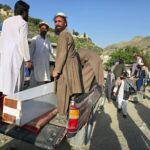
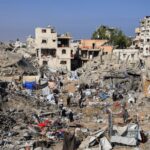
According to Mawlawi Zabihullah Mujahid, spokesperson for the Islamic Emirate, Pakistan once again violated Afghanistan’s airspace last night and conducted airstrikes in the provinces of Kunar, Khost, and Paktika. In a statement posted on X, Mujahid said that civilian homes were targeted in the attacks, resulting in the deaths of 11 children, one woman, and one elderly man. He further stated that 14 others, including women and children, were injured. Mujahid described the attacks as a crime against humanity and strongly condemned them.
The recent airstrikes in these Afghan provinces have once again raised a critical question: How can a government speak of peace and humanitarian values on the global stage while simultaneously dropping bombs on civilians in a neighboring country? This contradiction is not merely a political inconsistency; many observers view it as a clear example of double standards and hypocrisy.
Political analysts argue that Islamabad has long sought to portray itself internationally as a supporter of peace and regional stability. However, its policy toward Afghanistan has for years been shaped by military pressure, interference, and security calculations. As a result, while Pakistani officials advocate peace in international forums, their actions on the ground often contribute to further instability and violence.
The killing of women and children is universally regarded as one of the most tragic and condemnable consequences of any conflict. When those who publicly advocate peace are perceived as being connected to actions that result in civilian deaths, their moral credibility inevitably comes under scrutiny. Critics argue that Shehbaz Sharif cannot call for peace in the Middle East while simultaneously distancing himself from military operations that affect Afghan civilians.
For this reason, many political observers view the Pakistani prime minister’s recent statements as an example of a contradictory and hypocritical policy. In their view, peace carries meaning only when leaders apply the same principles consistently across all aspects of their foreign policy, rather than promoting peace in one region while allowing violence to continue in another.
Today, the government of Shehbaz Sharif faces a serious moral and political question: Is its call for peace a genuine commitment, or merely a diplomatic slogan aimed at pleasing the international community? As long as attacks on Afghan civilians continue, many will regard such appeals for peace as empty rhetoric and a symbol of political hypocrisy.
Consequently, Shehbaz Sharif is increasingly seen by critics as a leader whose words on peace do not align with the realities of his government’s actions—a perception that risks undermining Pakistan’s international credibility, moral standing, and diplomatic image.