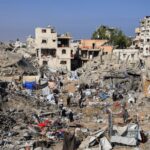




In Pakistan’s latest attacks, at least three civilians in Kunar — one man, one woman, and one girl — have been killed, while four other civilians have been injured. UNAMA has confirmed these civilian casualties.
This is not the first time that Pakistan has carried out airstrikes on Afghan soil in which civilians have lost their lives. In February 2026 alone, UNAMA reported that at least 13 civilians were killed and seven others injured in Pakistani airstrikes in Behsud and Khogyani districts of Nangarhar; women and children were also among the victims.
Earlier, on June 28, according to UNAMA, at least 28 civilians were killed and 49 others injured in Pakistani airstrikes in Paktia, Paktika, and Kunar. Women and children were also among the victims.
These figures are not merely numbers. Behind every one of them is a family; a father, mother, son, daughter, or child who will no longer be among their loved ones. For families who lose a loved one to war, the security justifications given by the attacking side cannot fill the void left by their loss.
Pakistan usually claims that its airstrikes target the positions of militant groups. However, the confirmation of civilian deaths by the United Nations raises serious questions about the extent to which necessary precautions were taken to protect civilians during these operations.
Under international humanitarian law, the protection of civilians during armed conflict is a fundamental principle. UNAMA has repeatedly called on all parties to respect the principles of distinction, proportionality, and precaution so that civilians are protected from harm.
The Afghan people are not asking the world for special treatment; they simply want their lives to be safe. After decades of war, this nation continues to live under the shadow of conflict. If Pakistan has security concerns, there are political, security, and diplomatic means to address them. However, military operations on the territory of another country, carried out in the name of addressing security concerns and resulting in civilian families becoming victims, cannot be considered an acceptable course of action.
Pakistan must understand that dropping bombs on the homes of Afghan people is not a solution to these problems. If there are security disputes between Islamabad and Kabul, they should be resolved through dialogue, direct engagement, and available diplomatic channels. The use of force, particularly when women and children become victims, risks deepening the crisis.
The international community, too, must not limit itself to expressions of “concern” and “regret” after every attack. If protecting civilian lives is a fundamental principle of international law, then serious and effective measures must also be taken to ensure that these principles are upheld.
The United Nations, international human rights organizations, and influential countries in the region must strengthen their voice regarding the continued victimization of Afghan civilians. Pakistan must be clearly urged to prevent attacks on Afghan territory that put civilian lives at risk and contribute to greater hatred and mistrust between the peoples of the two countries.
The blood of Afghans must not be treated as worthless. The woman who was killed in Kunar, the girl who was deprived of the rest of her life, and the man who was taken away from his family are not merely statistics in a military strategy; they were human beings who had the right to life, family, and a future.
We strongly condemn Pakistan’s latest airstrikes, particularly because of the killing of Afghan civilians, and call on the international community to take practical measures to prevent the bloodshed of Afghan civilians. The blood of Afghan civilians must not be shed any further; the international community must take practical action to stop this bloodshed.