


Olive cultivation is emerging as a promising alternative for farmers in eastern Afghanistan, offering a potential source of income while helping rural communities cope with drought and growing water shortages.
According to a report by Agence France-Presse (AFP), farmers in Nangarhar Province are increasingly turning to olive trees because of their ability to survive with relatively little water compared with traditional crops such as wheat, rice and onions.
One example is Abdullah Orzala, who established an olive orchard 15 years ago in Saidan Arabi village. His initiative has since expanded, with thousands of additional olive trees planted in other parts of Nangarhar.
Orzala says adapting agriculture to climate change and protecting limited water resources were among the main reasons behind his decision to invest in olive farming.
Agricultural specialists say olive trees can also improve soil quality and reduce erosion, making them suitable for areas facing environmental challenges.
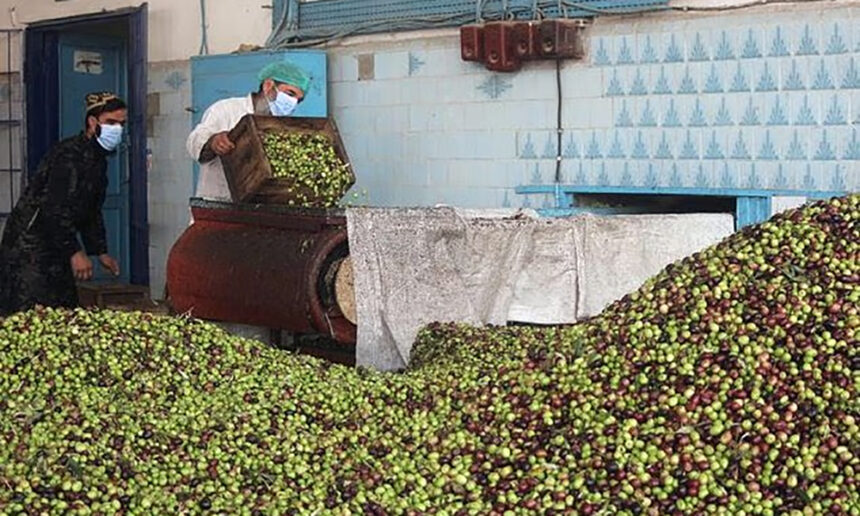
The olive harvest has created new economic opportunities for local communities. Around 500 villagers in Saidan Arabi participate in harvesting olives, which are processed into oil using a cold-pressing method.
According to production supervisor Sadiqullah Afghan, freshly harvested olives are processed immediately to maintain the quality of the oil. The product is sold in organic shops in Kabul for up to $17 per kilogram.
Orzala’s agricultural activities have also created 16 permanent jobs across two villages in Nangarhar.
Afghanistan’s Olive industry expanding
Afghanistan’s olive industry dates back to the 1960s, particularly in eastern Nangarhar. However, decades of conflict destroyed nearly half of the country’s olive-growing areas.
The sector has gradually recovered in recent years. New equipment was provided to the state-owned olive processing mill in 2019, and production has increased.
According to Akhtar Muhammad Hashimi, director of the state-owned company, the facility produced approximately 135,000 litres of olive oil last year. Production is expected to reach between 143,000 and 165,000 litres this year.
The company currently sells its entire production within Afghanistan but hopes to enter international markets in the future.
Meanwhile, olive cultivation is expanding beyond Nangarhar. The Food and Agriculture Organization (FAO) has supported the planting of 381 hectares of olive trees, highlighting their potential to generate sustainable income for rural families.
Despite these developments, limited access to international banking and markets remains a major obstacle to expanding Afghanistan’s olive exports.
For many farmers in eastern Afghanistan, however, olive trees represent more than an agricultural investment. They offer a potential source of income, employment and resilience against worsening drought conditions.