




(Prof. Dr. He Hongmei, Director of the Institute of South Asian Studies, Yunnan Academy of Social Sciences, China)
For many years, Afghan pine nuts have been recognized for their excellent quality and unique characteristics. However, due to challenges such as difficult transportation conditions, high logistics costs, and limited connections with international markets, many high-quality products struggled to reach overseas consumers. For farmers, the biggest challenge was often not producing quality pine nuts, but finding effective ways to sell them and achieve greater value from their products.
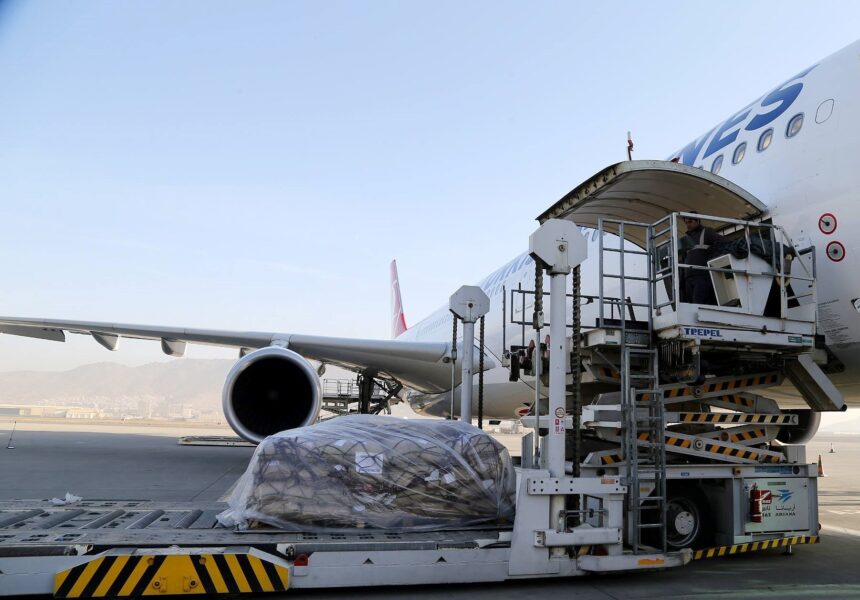
Cooperation brought new opportunities. The launch of the “Pine Nut Air Corridor” addressed key challenges facing Afghan agricultural exports and created a more efficient pathway connecting local producers with international markets. By reducing transportation barriers and improving trade efficiency, the air corridor enabled Afghan pine nuts to reach Chinese consumers through a faster and more direct route.
The story of the “Pine Nut Air Corridor” demonstrates that economic cooperation is not only about exchanges between governments or businesses; it can also bring tangible changes to the lives of ordinary people. Behind every shipment of pine nuts are farmers, workers, traders, and families whose livelihoods are connected through trade. When local products gain access to wider markets, cooperation becomes a source of new opportunities and a driving force for shared development.
A Pine Nut Connecting Two Markets
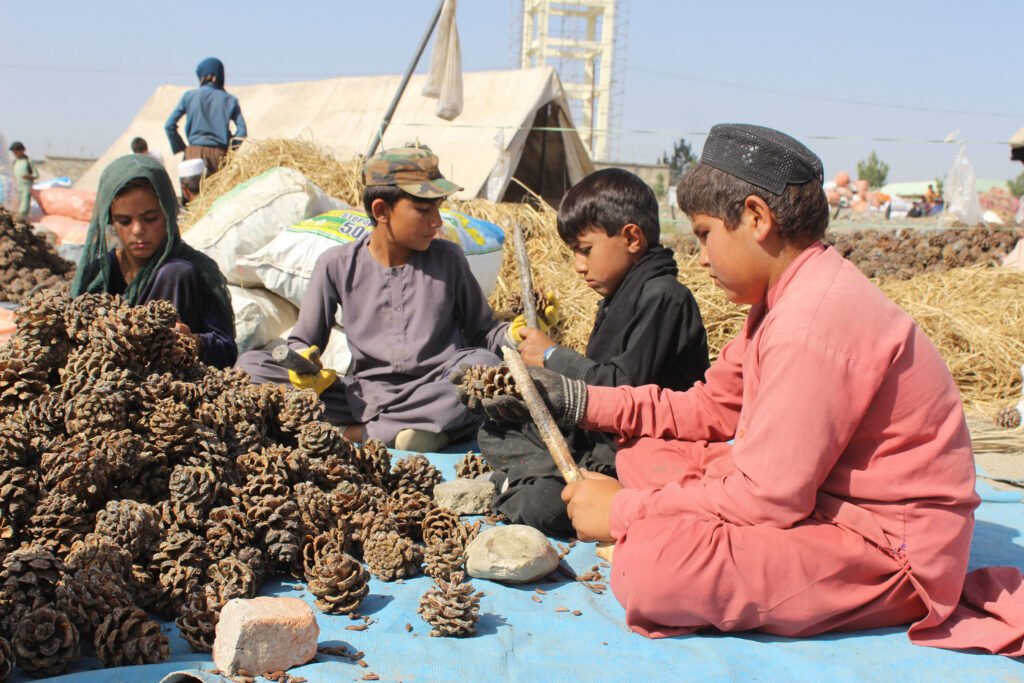
From a pine nut harvested in the mountains of Afghanistan to a product reaching consumers in international markets, it goes through multiple stages, including harvesting, processing, sorting, packaging, transportation, and export. This is not only a chain of commodity circulation, but also a development chain connecting farmers, enterprises, and markets.
In Afghanistan, many distinctive agricultural products come from remote mountainous and rural areas. For local farmers, agriculture is not only a way of production but also an important source of livelihood for their families. However, transforming high-quality agricultural products into economic value often requires overcoming geographical limitations and gaining access to broader markets. How to connect resources from mountainous areas with external markets is a common challenge faced by many developing countries in agricultural development.
In recent years, with the deepening of economic and trade exchanges between China and Afghanistan, Afghan pine nuts have gradually become a distinctive example of bilateral trade cooperation. A pine nut from Afghan forests has entered the Chinese market through trade channels, allowing more people to discover Afghanistan’s rich agricultural resources and unique products.
The significance of this cooperation goes beyond simply increasing the export of a single commodity. For producers, a more stable market provides clearer value for their products. For local economies, stronger trade connections can stimulate the development of related sectors such as processing, transportation, and sales. For both countries, agricultural trade has become an important bridge for enhancing economic exchanges and strengthening people-to-people connections.
China has a vast consumer market and growing demand for high-quality agricultural products, while Afghanistan possesses unique natural conditions and rich agricultural resources. The complementary advantages of the two sides have made pine nut trade a vivid example of China-Afghanistan economic cooperation.
More importantly, this cooperation reflects the positive significance of open markets. International trade is not merely an exchange of goods; it is a process of building connections between different regions and sharing development opportunities. When a country’s distinctive products enter another country’s market, what lies behind the trade is the aspiration of producers for development and consumers’ demand for quality products.
From Specialty Products to Industrial Development
The significance of pine nut trade lies not only in the export of an agricultural product, but also in how market cooperation can enhance industrial capacity.
For any specialty agricultural product, moving from simply “selling products” to “developing an industry” requires a more complete industrial chain. Product grading, quality control, processing technologies, packaging design, brand building, storage, logistics, and market promotion all contribute to improving competitiveness and enhancing the sustainability of industrial development.
Afghanistan has abundant agricultural resources, and products such as pine nuts, saffron, and dried fruits have strong development potential. However, transforming resource advantages into industrial advantages requires more than favorable natural conditions. It also depends on stronger market connections, technological support, and industrial organization.
China has accumulated extensive experience in agricultural industrialization, e-commerce development, and logistics systems. In the future, the two sides can explore further cooperation in areas such as agricultural processing, trade channel development, and market promotion, helping specialty products increase their added value and ensuring that more development benefits reach producers.
Agricultural development is closely linked not only to economic growth but also to people’s livelihoods. For Afghanistan, promoting specialty agriculture can help strengthen the vitality of rural economies, create more opportunities for young people, and enhance the resilience of local development.
The story of pine nut trade reflects a deeper development logic: a small agricultural product, when connected with markets and supported by a stronger industrial chain, can generate greater economic value. When local resources are effectively integrated with international markets, and when industrial chains continue to expand and improve, agriculture is no longer merely a traditional sector—it can become an important force driving economic development.
The Value of Cooperation Lies in Improving People’s Lives
The goal of economic cooperation is to ensure that the benefits of development reach people more broadly. For ordinary families, the meaning of development is not reflected only in macroeconomic figures, but also in everyday changes: whether households have more stable sources of income, whether young people have more employment opportunities, and whether rural areas have greater space for development. These seemingly ordinary concerns form the foundation for the sustainable progress of a society.
The value of China-Afghanistan economic and trade cooperation is also reflected in these concrete and tangible changes. Agricultural trade not only connects producers and consumers, but also links family incomes with market opportunities. Industrial cooperation not only promotes the circulation of goods, but also creates new space for the development of related industries.
From a single order, to a batch of exported products, and then to a gradually improving industrial chain, the impact of economic cooperation is often transmitted to the lives of ordinary people through countless specific links. For farmers, a more stable market means greater opportunities for development; for young people, the growth of industrial chains means more employment choices; for local economies, stronger trade connections mean new sources of growth.
Development has never been an abstract concept. It is reflected in every family’s aspiration for a better life. When cooperation creates more opportunities and unleashes greater potential, its significance goes beyond the economy itself and becomes an important force for promoting common development.
The Future of China-Afghanistan Cooperation through the Lens of the “Pine Nut Air Corridor”
Today, China-Afghanistan cooperation continues to expand into new areas, yet the “Pine Nut Air Corridor” remains of special significance. It demonstrates that international cooperation is not limited to large-scale infrastructure projects; it can also begin with a specific trade transaction or a distinctive local product.
Looking ahead, the two sides can further deepen cooperation in areas such as agricultural processing, agricultural technology, cold-chain logistics, e-commerce, and brand development. Such efforts can help more Afghan specialty products enter international markets while allowing more ordinary people to share the opportunities brought by cooperation.
The ancient Silk Road once connected different civilizations and facilitated exchanges of goods, cultures, and ideas. Today, although a cargo plane carrying pine nuts cannot replicate the grandeur of ancient caravans, it continues the spirit of connectivity and exchange in a new form.
The “Pine Nut Air Corridor” connects the shared aspirations of the Chinese and Afghan peoples for development, prosperity, and a better future. As more Afghan specialty products reach global markets, China-Afghanistan economic and trade cooperation will continue to write new chapters through mutual benefit and shared development.