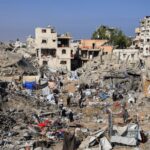




Yesterday’s explosion inside a Chinese restaurant in Kabul, which tragically resulted in casualties, is a deeply worrying incident that has shaken public conscience. Such events not only endanger innocent lives but also pose a serious threat to the relative stability achieved in recent years, the people’s sense of security, and the country’s fragile economic hopes. A nation that has endured decades of war, bloodshed, and bombings cannot and must not be pushed back into a cycle of fear and instability.
After years of conflict, Afghanistan has reached a stage where people have begun to breathe more freely. Markets are open, daily life has resumed, citizens are focused on work, and investors are cautiously exploring opportunities. Incidents like this, however, are clearly intended to disrupt this atmosphere and send a dangerous message that insecurity still lurks beneath the surface. This is a matter that must not be taken lightly.
The Afghan government bears the fundamental responsibility of protecting the lives, property, and dignity of its people. The recent explosion in Kabul should not be treated as a routine news item or confined to brief statements. It is a serious test of governance and responsibility. A thorough and transparent investigation is essential to identify the cause of the blast, the method used, and the individuals or networks behind it. Those responsible—regardless of who they are or whom they may be linked to—must be swiftly brought to justice. Justice only has meaning when the public clearly sees that crime does not go unpunished.
Afghanistan today stands at an important crossroads, attracting regional and international attention. On one hand, opportunities for economic cooperation, transit projects, and foreign investment are emerging; on the other, there are still forces that do not wish to see Afghanistan stable and self-reliant. It is no secret that some major global powers and hostile neighbors are uncomfortable with peace and security in Afghanistan. Their interests are served by keeping the country unstable, insecure, and dependent, allowing them to pursue political and strategic agendas. Incidents like the Kabul explosion may well be part of such destructive efforts to portray Afghanistan once again as a hub of violence and chaos.
For this reason, the responsibility of security institutions is heavy and undeniable. Reactive measures alone are not sufficient; prevention must be the priority. Intelligence gathering and monitoring must be strengthened, urban security arrangements must be reviewed, and any existing gaps that could be exploited by hostile elements must be addressed without delay. Authorities must remain vigilant, proactive, and decisive, as even minor negligence in security can lead to grave consequences.
Public cooperation is equally vital. Security cannot be ensured solely through checkpoints and armed patrols. It also depends on public awareness, shared responsibility, and timely reporting of suspicious activities. When citizens remain alert and committed to protecting collective stability, attempts to undermine security can be effectively neutralized.
The recent incident in Kabul should serve as a clear warning. Afghanistan has paid an extraordinarily high price for war and violence and can no longer afford to do so. This land is meant for schools, hospitals, factories, roads, and development—not for bombs and explosions. Anyone who seeks to destabilize Afghanistan stands in direct opposition to the will of its people.
The Afghan government must demonstrate, through clear actions and firm policies, that it has zero tolerance for insecurity. Transparent investigations, the public prosecution of perpetrators, and strengthened security measures will not only restore public confidence but also send a strong message to the world that Afghanistan is no longer a playground for external manipulation.
In conclusion, the pain caused by yesterday’s explosion is not limited to the families of the victims; it is felt by the entire nation. Healing this pain requires more than words—it demands accountability, vigilance, and decisive action. Afghanistan must not once again become a center of explosions and instability. This goal can only be achieved if the government and the people stand together with determination and unity against all forms of insecurity.