


The Bamiyan Department of Information and Culture says 12 projects have been implemented over the past five years to restore and preserve historic monuments in the ancient sites of Gholghola, Kakrak, Zahak and Caravanserai.
The projects were implemented by the United Nations Educational, Scientific and Cultural Organization (UNESCO) and the Firozkoh Foundation in areas that faced a serious risk of destruction.
Zia Mohammad Hashemi, head of culture and arts at the Bamiyan Department of Information and Culture, said: “Over the past five years, we have done a lot of work at historic sites and our work is continuing. We are restoring damaged sections of historic sites. We have built parking areas and accommodation for guards so they can protect these sites.”
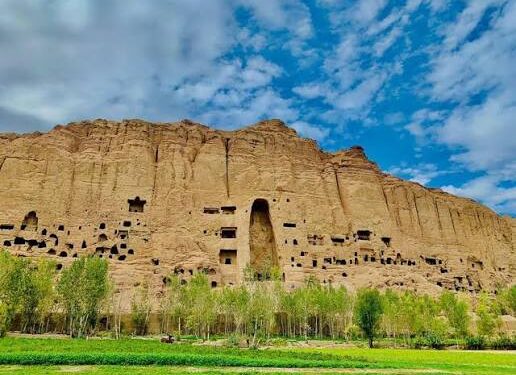
The giant Buddha statues and the ancient cities of Zahak and Gholghola in Bamiyan have attracted significant attention from foreign tourists.
Recently, a group of eight tourists from Italy and Germany visited the ancient city of Gholghola and the site of the Buddha statues.
They say they want to experience firsthand what they have heard about these historic sites.
Italian tourist Lucia Cristiani said: “We traveled to Afghanistan and arrived here just a few days ago. We came here because of the culture of this country. You know, there is a city behind us, and it is very interesting to learn about the history of the Bamiyan Buddhas and the Gandhara school of art.”
Italian tourist Luciano Califi said: “We came to Bamiyan mainly for one specific purpose: the Buddha statues. The Bamiyan Buddhas are famous around the world, particularly among us Italians. We came all this way to see the place where the Buddha statues once stood. These statues were famous around the world. Although they are no longer here, we hope to at least feel some trace of their presence.”
Some domestic tourists say restoring historic monuments and providing facilities for visitors can contribute to the growth of the tourism industry and call for greater attention to the sector.
Mohammad Rustam, a resident of Herat, said: “If officials pay special attention to restoring historic sites and rehabilitate them, Bamiyan could become an even more important province in Afghanistan over the next five years.”
According to figures from the Bamiyan Department of Information and Culture, more than 30 ancient sites, 25 recreational sites and four religious sites are registered with the department, and long-term plans for their restoration are underway.