


Within less than 2 kilometers and just 17 days apart, the deaths of two Americans at the hands of U.S. federal law enforcement have once again shed the spotlight on persistent problems of violent policing in the United States.
Occurring near the site where George Floyd was killed nearly six years ago, the latest incidents underscore how excessive law enforcement force — entangled with racial discrimination, social inequality, widespread gun violence and systemic bias — continues to weigh on U.S. society, while deepening partisan divisions further complicate efforts at reform.
“STREET KILLINGS”
Residents of Minneapolis, Minnesota, braved freezing winds on Jan. 25 to mourn Alex Pretti, a 37-year-old intensive care unit nurse who was fatally shot by law enforcement officers a day earlier.
A spokesperson for the U.S. Department of Homeland Security (DHS) said federal officers fired “defensive shots” after a man (Pretti) with a handgun approached them and “violently resisted” when officers tried to disarm him. However, video footage filmed by witnesses soon contradicted the account, showing Pretti holding a mobile phone, with no evidence indicating that he was armed.
The killing marked the second fatal immigration enforcement incident in Minneapolis this month. On Jan. 7, officers from U.S. Immigration and Customs Enforcement (ICE) shot dead Renee Good, a 37-year-old mother of three. The shooting occurred about 1.6 kilometers from the site where George Floyd, an African American man, died in May 2020 after a police officer knelt on his neck.
The shootings have ignited public outcry in Minneapolis. Local residents described the incidents as “street killings” and “cold-blooded executions,” calling for an immediate end to federal law enforcement violence. The New York Times columnist Lydia Polgreen wrote that “in Minneapolis, I glimpsed a civil war.”
On Friday, protesters gathered in hundreds of cities across the United States as part of a nationwide strike calling for “no work, no school, no shopping” to oppose federal immigration enforcement operations and the recent ICE-related fatal shootings.
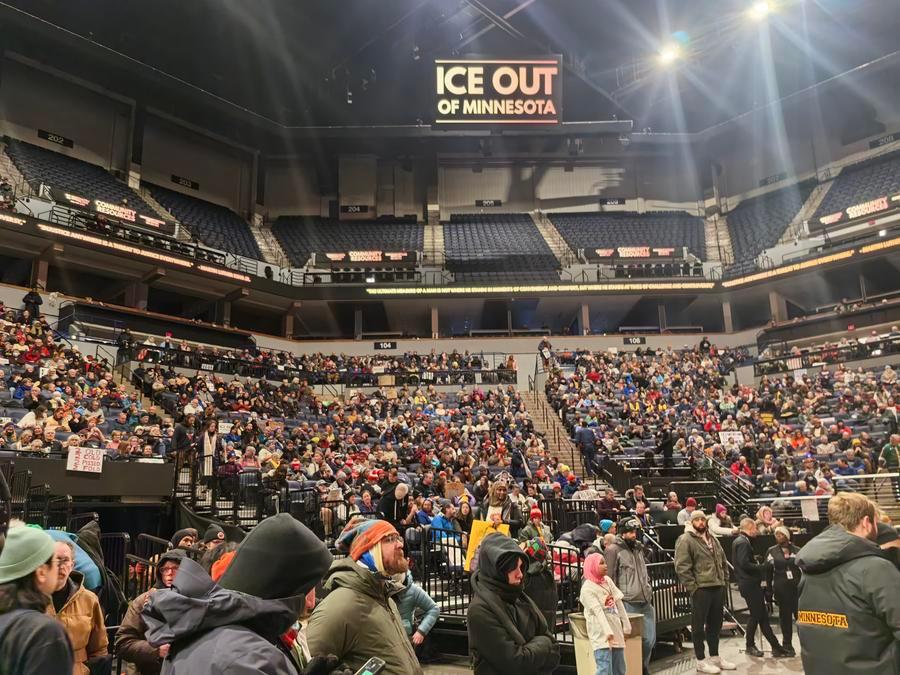
The demonstrations, organized under the banner “National Shutdown,” took place across the United States with actions ranging from business closures to student walkouts and street marches. “The people of the Twin Cities have shown the way for the whole country, to stop ICE’s reign of terror, we need to shut it down,” organizers wrote on the National Shutdown website.
The ICE, formed in 2003 through the merger of several agencies including the former Customs Service and the Immigration and Naturalization Service, is now the largest law enforcement and customs body under the DHS. According to German newspaper Tagesspiegel, ICE officers have used firearms in 31 incidents since last summer, resulting in 11 casualties, while 32 people died while in custody. About 70,000 individuals are being held in ICE detention facilities.
The ICE represents only the tip of the iceberg of law enforcement violence in America. Research by the University of Illinois Chicago shows that around 250,000 people are injured each year during law enforcement encounters due to misconduct, while more than 600 die at the hands of police officers. Data from the U.S.-based “Mapping Police Violence” project shows that in 2025 alone, U.S. police killed 1,314 people, with only six days throughout the year recording no police-related fatalities.
“Violence reigns on the streets of the USA, state violence,” Tagesspiegel reported. A commentary in The Atlantic argued that U.S. law enforcement culture has broken down, with brutality and dehumanization deeply entrenched in many police departments.