



Yesterday’s events—marked by U.S. military strikes on Venezuela and the highly publicized detention of the Venezuelan president and his wife—once again exposed a bitter reality: today’s so-called international order is no longer governed by law, justice, or shared principles, but by power, weapons, and political self-interest. This was not merely an attack on Venezuela; it was a direct blow to the very system that has long claimed to uphold sovereignty, legality, and human rights.
The world has reached a point where any state possessing military, economic, and media dominance can violate the UN Charter, trample international law, and ignore humanitarian norms without facing accountability. The strikes on Venezuela and the humiliation of an elected leader’s family send a clear message: national sovereignty is sacred only for the weak, not for the powerful.
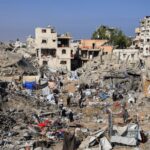
What makes this situation even more disturbing is that double standards are no longer hidden. On the one hand, sudden military assaults, sanctions, threats, and arrests of leaders are justified under the banner of “global security.” On the other hand, those responsible for the killing of millions of innocent people continue to walk freely, attend international forums, and justify mass violence under the pretext of “self-defense.” The Israeli prime minister stands as a stark symbol of this blind international justice—someone whose bombing of children, women, and civilians has been witnessed by the entire world, yet who remains shielded from courts, sanctions, and accountability.
This contradiction is not limited to Venezuela or Palestine alone. It is a dangerous warning for all nations that lack military power but seek to preserve their independence. When the international order is turned into a tool of the powerful, every country becomes a potential target. Yesterday it was Iraq, today it is Venezuela, tomorrow it could be someone else.
The silence of the international community—or worse, its justification of such actions—pushes the world toward the law of the jungle, where rights are dictated by missiles rather than by legal norms. If this trajectory continues, a serious question must be asked: does an international order still exist, or has it been reduced to a slogan used to deceive the weak?
Today’s world is facing not only a security crisis, but a crisis of justice. As long as international laws are not applied equally, as long as power is allowed to replace accountability, and as long as the blood of millions is treated as expendable, instability will persist. The strikes on Venezuela should serve as a wake-up call. Otherwise, this broken global order will ultimately drag all of humanity into deeper chaos.