


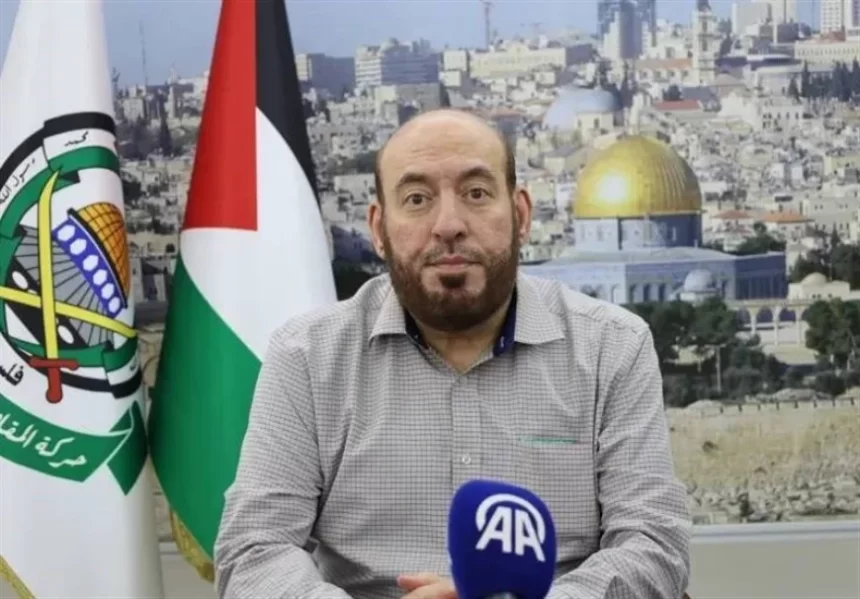
Mohammed Nazal, a senior leader of Hamas, stated that entering the second phase of the Gaza ceasefire agreement is impossible while the Israeli regime continues to obstruct progress. He emphasized that the role of any proposed international force must be clearly defined and rejected the notion that it should aim to disarm resistance forces or act as a new occupying power.
Nazal highlighted ongoing violations of the ceasefire by Israel, which he claims hinder the regular entry of essential supplies, including food and medicine to Gaza residents. He noted that the Rafah crossing remains closed, preventing crucial humanitarian aid from reaching refugees.
He further pointed out that many Arab and Islamic countries, as well as others globally, have expressed their refusal to participate in an international force tasked with disarming resistance groups. “The mission of this international force remains unclear,” Nazal remarked, questioning the objectives behind its deployment, particularly in relation to statements made by former President Trump.
Describing the current situation as “vague, dark, and unclear,” Nazal said that Hamas would reevaluate its position on the international force as the situation develops. He raised concerns about a proposed “peace council” for Gaza, questioning who would be involved, its functions, and the reasons for delays in its establishment.
Nazal reiterated that Hamas is open to a ceasefire agreement as a framework for negotiations but stressed that the details require clarification and adjustments. He also noted opposition from Arab and Islamic nations regarding the nomination of former British Prime Minister Tony Blair to lead the peace council, citing internal dissent even within the UK.
Additionally, he stated that the Israeli government is opposed to Turkey’s involvement in the international force, while Jordan has also declared it will not participate. Nazal insisted that Hamas cannot define its stance on the international force until the potential positive or negative impacts of its mission are known.
He asserted that the international force must not function as a new occupying entity. Khalid Mashal, another Hamas leader, recently suggested that such forces should focus on preventing conflict at the borders and maintaining peace, exerting pressure on Israel to halt military actions.
Finally, Nazal confirmed that Hamas has agreed to hand over governance of Gaza to a technocratic government, reflecting a broad consensus among Palestinian groups and the Egyptian government, with a list of representatives from various societal components prepared to support the establishment of a civil society in Gaza.