


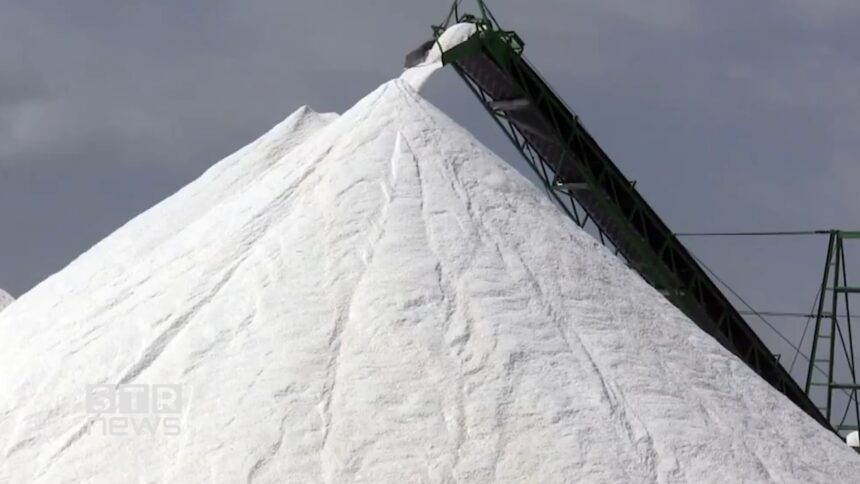
The Economic Deputy Office of the Prime Minister has announced that Afghanistan has achieved self-sufficiency in salt production.
According to the office, 28,000 tons of salt are currently extracted each month from 12 active mines located across 10 provinces, including Takhar, Samangan, Balkh, Faryab, Ghor, Herat, Parwan, Paktia, Ghazni, and Kandahar.
Hamidullah Fitrat, Deputy Spokesperson for the Islamic Emirate, stated: “Afghanistan, in addition to other mineral resources, possesses significant salt reserves. At present, extraction from 12 salt mines is ongoing, enabling the country to meet its domestic salt demand.”
Officials report that 53 factories are currently operating in the salt processing and production sector, providing both direct and indirect employment to a significant number of citizens.
Economic experts say that supporting local production is a crucial step toward national economic growth, reducing imports, and creating sustainable job opportunities.
Economic analyst Iraj Faqiri said: “The government should prevent the import of products that are already produced domestically. Doing so would create a suitable environment for domestic investment and eventually attract foreign investment.”
Dr. Sayed Abdullah Ahmadi noted: “Afghanistan has long faced challenges in the mining sector, particularly in salt extraction, which is considered a vital resource. The absence of a modern laboratory and lack of standard compliance show that high-quality, standardized salt remains inaccessible within the country.”
According to official statistics, Afghanistan needs 300,000 tons of salt annually, while the country’s current production capacity has reached 344,000 tons per year.