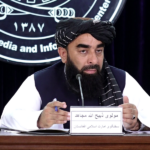
The 26th of Dalwa, marking the anniversary of the withdrawal of former Soviet forces from Afghanistan, is not merely a remembrance of a military retreat or a political turning point. It symbolizes the resilience, determination, and unwavering quest for independence of the Afghan people. On the occasion of the 37th anniversary of that historic event, the Acting Minister of Defense, Mohammad Yaqoob Mujahid, and the Deputy Administrative Prime Minister, Abdul Salam Hanafi, delivered remarks that reflected Afghanistan’s current political posture, security situation, and approach to international engagement.
The emphasis placed on political sovereignty during the ceremony is deeply rooted in Afghanistan’s historical experience. Over the past decades, the country has been a battleground for global rivalries, yet at every stage, the preservation of independence and national sovereignty has remained the central demand of its people. The Acting Minister of Defense reaffirmed that the Islamic Emirate has opened the doors of engagement with the international community, but strictly on the basis of mutual respect, religious and ideological values, and Afghanistan’s national interests.
Afghanistan does not seek isolation. On the contrary, it welcomes cooperation in trade, investment, and the lawful extraction of its vast mineral resources. This position indicates a willingness to participate in the global economic system, provided that engagement is grounded in equality rather than political pressure or conditional interference. The transparent and lawful management of mineral resources could provide Afghanistan with a critical pathway toward economic stability and self-reliance—if partnerships are built on balanced and respectful terms.
The Defense Minister’s remarks that certain countries and intelligence circles oppose lasting stability in Afghanistan, allegedly pursuing their interests through instability, echo the painful experiences of the past four decades. Afghans have repeatedly witnessed how foreign competition and covert agendas have shaped their internal realities. If such elements indeed seek to undermine stability, the most effective response lies in strengthening internal unity and fostering a broad national consensus.
A key assurance reiterated during the ceremony was that Afghan soil will not be used against any other country. In today’s interconnected world, building trust requires not only statements but also consistent, transparent actions. If Afghanistan continues to demonstrate in practice that its territory poses no threat to others, it can significantly improve regional confidence and open doors for broader economic cooperation.
On the domestic front, Deputy Prime Minister Abdul Salam Hanafi underscored the importance of unity and the rejection of prejudice within the Islamic system. In a country characterized by ethnic, linguistic, and cultural diversity, sustainable stability depends on inclusivity and collective participation. Unity must go beyond rhetoric; it requires policies that ensure all segments of society feel represented and invested in the nation’s future.
The emphasis on nationwide security and the prevention of narcotics cultivation and trafficking also carries substantial international significance. Sustainable improvements in these areas could contribute positively to Afghanistan’s global image. Security remains the cornerstone of economic development and social progress. Without it, neither investment nor long-term planning can flourish.
However, safeguarding security is not solely the responsibility of the state’s security forces. Public cooperation and vigilance against destabilizing elements are equally essential. When the state and the people move in harmony toward shared objectives, external pressures and covert disruptions lose their effectiveness.
The global landscape is rapidly evolving. Regional economic blocs are expanding, new trade corridors are emerging, and nations are recalibrating their foreign policies to secure strategic advantages. Afghanistan must navigate these shifts with strategic wisdom. Engagement—anchored in dignity; cooperation—guided by principles; and development—protected by sovereignty: these are the pillars upon which Afghanistan’s future can be built.
Ultimately, the anniversary of the Soviet withdrawal is not only a historical remembrance but also a forward-looking reminder. Political independence remains a value for which the Afghan people have made profound sacrifices. Preserving that independence, strengthening internal unity, ensuring lasting security, and engaging with the world through mutual respect can position Afghanistan not only as a guardian of its sovereignty but also as a constructive and stabilizing actor in the region.
Political Sovereignty First: A New Chapter of Engagement Based on Mutual Respect



Leave a Comment