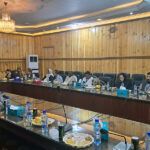




Afghanistan’s current situation is such that every official and professional meeting aimed at engaging with the international community, sharing security concerns, and expressing the country’s national interests holds particular importance. In this context, the seven-day visit of the Ministry of Interior Affairs delegation to China and its participation in an international security conference should not be regarded as merely an ordinary trip; rather, it can be considered an important opportunity to present Afghanistan’s security and political positions and to strengthen relations with other countries.
In the current global security environment, no country can address its security challenges solely through domestic capabilities. Terrorism, narcotics, cross-border crime, human trafficking, cybercrime, and other security challenges transcend borders and require joint cooperation among countries. Afghanistan, given its geographical position, is no exception to this reality. Therefore, Afghanistan’s participation in international security conferences can enable the country to directly share its security needs and experiences with security officials from around the world.
The delegation’s visit to China is also important because China is one of Afghanistan’s important neighbors and an influential country in the region. Expanding security relations with China, particularly in the areas of combating terrorism, border security, and the fight against narcotics, is valuable for Afghanistan’s security and regional stability. Such meetings provide an opportunity for Afghanistan’s security officials to directly present their needs, achievements, and concerns to relevant Chinese authorities.
On the other hand, Afghanistan’s presence in such international meetings is an important means of direct engagement and diplomatic relations for the country. When Afghan representatives hold face-to-face discussions with representatives of dozens of countries and international organizations at a joint meeting, Afghanistan’s own perspective on the country’s security situation can also be presented. This is important to ensure that discussions about Afghanistan are not limited solely to narratives presented by others.
The speech delivered at the main session of the conference regarding Afghanistan’s security policies, security situation, and measures undertaken is also significant from this perspective. Although participation in international meetings should not be limited merely to speeches, such opportunities enable Afghanistan to formally and professionally present its security experiences, challenges, and demands.
Separate meetings with security and administrative officials from other countries are also among the important aspects of this visit. Discussions with representatives of the United Arab Emirates, Tajikistan, Iran, Pakistan, Iraq, Syria, Algeria, Tunisia, Libya, and other countries can provide an opportunity to expand Afghanistan’s regional security relations. In particular, continued security contacts with neighboring countries are important for managing borders, terrorism, trafficking, and other common challenges.
Likewise, visits to China’s security and police institutions and public service organizations are beneficial for Afghanistan in terms of the transfer of experience and capacity building. Afghanistan can benefit from the experiences of other countries in areas such as professionalizing the police, communications and technological advancements, public order, crime prevention, and institutional management. In particular, for the Ministry of Interior Affairs, establishing relations with advanced institutions in the fields of new technologies and communications equipment is of considerable importance.
However, the true value of such visits becomes even greater when practical outcomes emerge after the conferences. If the meetings lead to specific understandings and sustained relations in the areas of security cooperation, information exchange, professional training, police capacity building, and joint measures against crime, the impact of such a visit will extend far beyond the conference and speeches.
Overall, for Afghanistan, participation in international security meetings and regional conferences is not merely a matter of attendance; rather, it is an important means of strengthening national security, regional engagement, presenting Afghanistan’s position, gaining experience, and building trust. Afghanistan needs to make professional and purposeful use of such opportunities, clearly present its security needs, and move its relations with other countries toward specific and practical cooperation.