



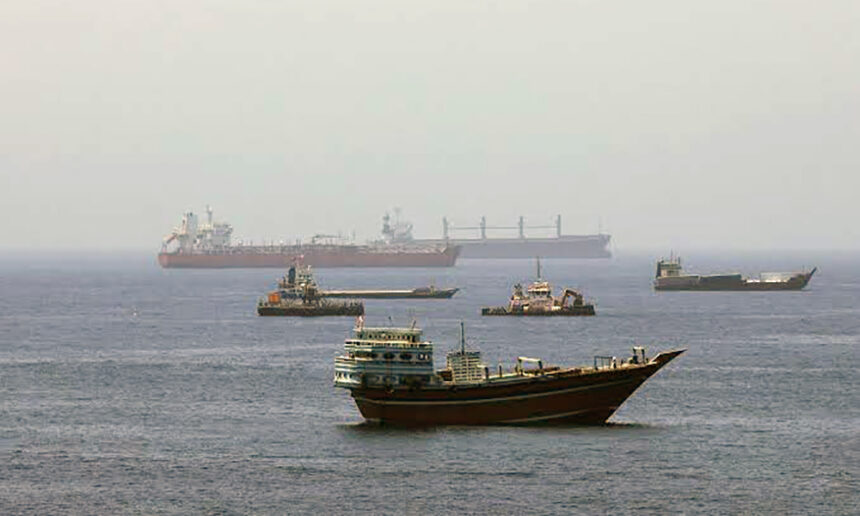
Commodity vessel transits through the Strait of Hormuz fell to a single digit per day at the weekend, preliminary shiptracking data showed on Monday, well below a 10-day average of 14, Reuters reported.
Over the weekend, four vessels exited the Gulf through the strait, including a Handysize vessel sailing in ballast, a Handy vessel carrying LPG, a Supramax carrying fertilizer and a Suezmax laden with crude or condensate.
Ten vessels entered the Gulf, including a mini-bulker carrying minor bulk commodities, a Handymax carrying grain, a Panamax carrying metals and a Supramax carrying dry bulk cargo, the data showed.
The figures exclude any vessels that might have crossed the strait with their Automatic Identification System transponders turned off to avoid detection.
A vessel was struck by an unknown projectile while transiting the Strait of Hormuz, the United Kingdom Maritime Trade Operations said early on Sunday.
It said the crew’s status, damage assessment and environmental impact were unknown.
Meanwhile, the vital East-West oil pipeline in Saudi Arabia, which has helped relieve the logjam in the Strait of Hormuz, was temporarily shut down by a drone attack coming from Iraq, Saudi officials said.
Before the Iran war started on February 28, the strait typically handled about 125 large, commercial vessels per day, including tankers, gas carriers, bulkers and container vessels, accounting for some 20% of the world’s daily crude oil and liquefied natural gas supply, read the report.
A U.S. blockade of Iran-related shipping has halted Iranian crude oil exports since it was reimposed in mid-July.
In the Bab el-Mandeb strait, 24 and 27 commodity vessels travelled through respectively on Saturday and Sunday, tracking data showed, compared with an average of around 27 ships over the last 10 days.