



By Qi Xijia
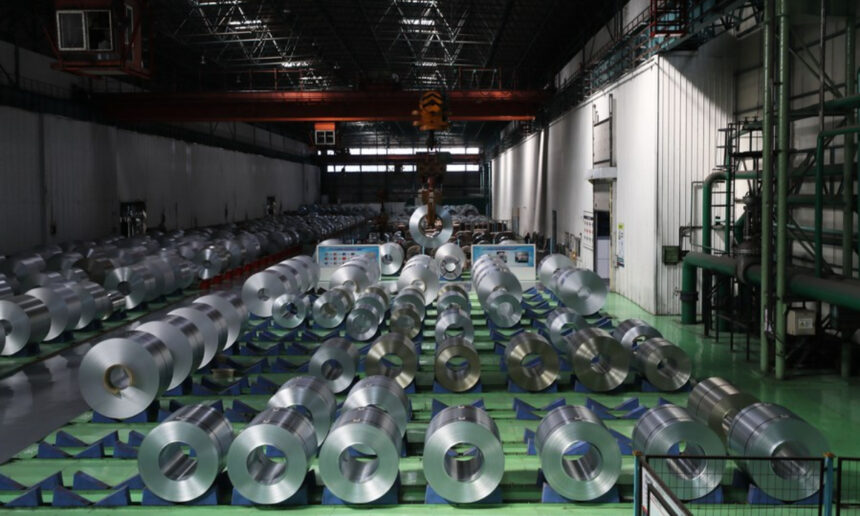
The US is reportedly pressuring Mexico to impose Section 232-style tariffs on Chinese steel, a move experts slammed as blatant trade coercion that violates World Trade Organization (WTO) rules and undermines Mexico’s manufacturing competitiveness.
The US has asked Mexico to mirror Washington’s tariff wall against Chinese steel and aluminum by imposing Section 232-style duties on imports from outside North America, according to four people with direct knowledge of the matter, Bloomberg reported on Sunday.
The goal is to preserve preferential treatment for steel produced in the US, Mexico and Canada while applying a common external barrier to Chinese imports. The precise rates and products covered by the potential tariffs remain under discussion, the people added. One of the sources said that the US aims to reach a framework agreement with Mexico by the end of the year.
The request comes as part of negotiations over the North American trade deal known as the USMCA, according to Bloomberg.
The US and Mexico have been holding bilateral talks as part of a process to review the USMCA. The stakes have risen since the US declined on July 1 to renew the pact in its current form, instead shifting to rolling negotiations as it seeks to tighten regional rules of origin and limit China’s role in North America, Bloomberg reported.
The US practice represents typical trade coercion. The US Section 232 tariffs have already been ruled inconsistent with WTO rules. Now, by leveraging the USMCA renewal negotiations as bargaining leverage, the US is coercing Mexico to adopt discriminatory tariffs and erect barriers targeting Chinese steel and aluminum products, Li Yong, an executive council member of the China Society for WTO Studies, told the Global Times on Monday.
Li noted that this move blatantly violates the WTO principle of non-discrimination and seriously undermines international trade rules and the rules-based global trading order.
“Essentially, the US is hijacking Mexico’s economic and trade interests and forcing the country to take sides in geopolitical games. Such practices not only damage China-US trade relations, but also drag third-party countries into passive containment of China’s trade. It is a typical act of trade protectionism that builds exclusive small blocs in global trade,” Li added.
In its attempt to move forward in the talks, Mexico offered earlier this year to sharply reduce purchases of Chinese steel, one of the people said.
Mexico should recognize that the US is prioritizing its own interests, and will likely continue leveraging tariffs and trade rules to exert sustained pressure, forcing Mexico into endless concessions, Zhou Mi, a senior research fellow at the Chinese Academy of International Trade and Economic Cooperation, told the Global Times on Monday.
Zhou noted that such coercion would substantially raise the cost of upstream raw materials for Mexican manufacturers. As a major manufacturing hub, Mexico would face higher input costs, which would weaken the competitiveness of its finished products, hinder export growth and undermine long-term industrial development. By shifting its own trade protection costs to neighboring countries through unilateral economic coercion, the US is engaging in typical trade bullying, he said.
In June 2025, commenting on the US move to raise Section 232 tariffs on imported steel and aluminum and related derivative products from 25 percent to 50 percent, He Yongqian, spokesperson of China’s Ministry of Commerce, said at a press conference that Section 232 tariffs are typical unilateralism and protectionism and have already been ruled by the WTO dispute settlement mechanism to be inconsistent with WTO rules.
“The latest US tariff hike on steel, aluminum, and related derivatives is not only self-defeating and detrimental to industrial security, but also severely destabilizes global industrial and supply chains, a move that has already drawn opposition from multiple countries,” He said.