


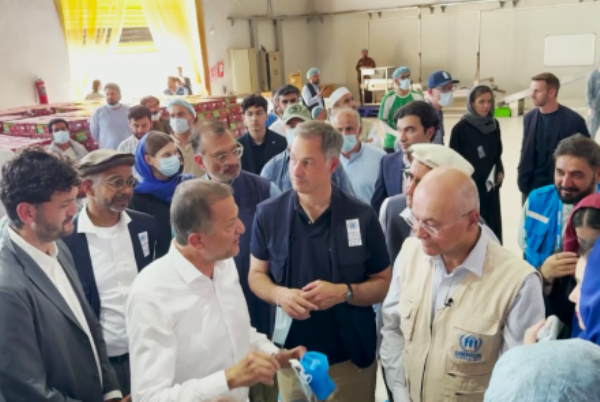
Alexander De Croo, head of the United Nations Development Programme (UNDP), and Barham Salih, the UN High Commissioner for Refugees (UNHCR), visited several projects in Mazar-e-Sharif that are being implemented with the support of the two UN agencies.
During the visit, the two officials stressed the importance of the Islamic Emirate’s cooperation in ensuring the continuation of international assistance, making use of the talents and capabilities of all Afghans, and maintaining engagement with the international community.
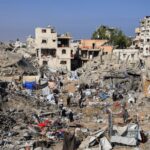
UN High Commissioner for Refugees Barham Salih said Afghanistan’s infrastructure had been severely damaged, access to basic services remained limited, and the labor market continued to face serious challenges. He said the international community should continue supporting Afghanistan and urged the authorities to cooperate and treat all Afghans, women and men alike, fairly to help maintain international confidence and ensure continued assistance.
Alexander De Croo said that while many things were moving in the right direction in Afghanistan, the country continued to face challenges that required attention. He said the United Nations remained committed to keeping the world’s attention focused on Afghanistan and stressed that those challenges could only be addressed through cooperation, dialogue, and unity.
Some women who recently returned from neighboring countries said access to employment had helped them achieve greater financial independence and improve their living conditions.
Maryam, one of the recent returnees working on a UN-supported project, said: “The income we earn here allows us to cover our own expenses. We do not want to depend on others for support. We can work here and stay employed.”
Azada Rahimi, another employee working on a UN-supported project, said: “We are very happy that we have been given the opportunity to work so that we can help support our families.”
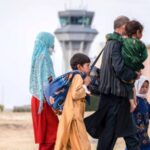
As the deportation of Afghan migrants from Pakistan and Iran has accelerated, creating employment opportunities for returnees, particularly women, has become one of the key priorities of humanitarian organizations.
The initiative aims to strengthen their economic self-reliance and support their reintegration into society.