



Author: Himmat Bahar
Introduction
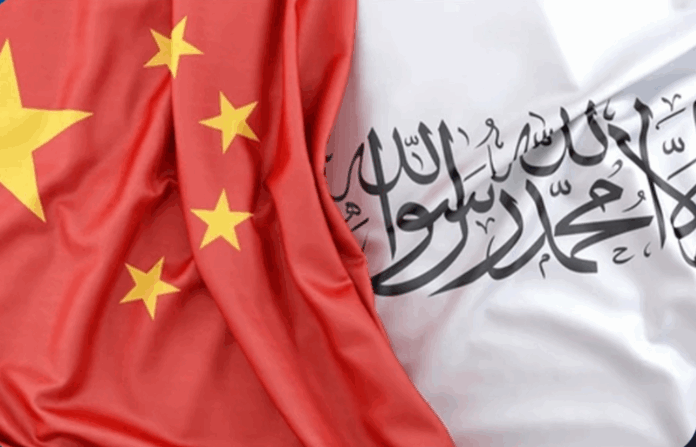
Relations between countries reveal their true value when one nation faces hardship and another extends its support. Afghanistan and China, whose ties date back centuries, have once again passed through an important test in recent years.
Following the political changes in Afghanistan, which brought economic pressure and a humanitarian crisis, China was among the countries that sought to maintain its relations with Afghanistan and provide assistance. This situation has added a new dimension to the relationship between the two nations.
The historical significance of the Silk Road was not limited to trade; it also served as a vital bridge connecting civilizations. Afghanistan lay at the heart of this route, while China was a key partner from the East.
Chinese historians, including the renowned Tang-era traveler Xuanzang, described Afghanistan as an important center of knowledge, religion, and culture. His accounts show that these ties were not merely economic, but also intellectual and spiritual in nature.
Contemporary Developments: Afghanistan’s Challenging Phase
Following the collapse of the previous Afghan government, the country faced a severe economic and humanitarian crisis. The reduction in international aid, banking restrictions, and widespread economic hardship posed serious challenges that affected the lives of millions of Afghans. At the same time, many countries reduced their presence, but China was among the few that sought to maintain engagement.
A political analyst, Jabar Sahar, notes:
“In international politics, it is important which countries do not cut off engagement even in difficult times, because those relationships build long-term trust.”
China’s Humanitarian Assistance: A Partner in Difficult Times
As Afghanistan faced a humanitarian crisis, China initiated a series of aid efforts. These included food supplies, medicine, and other essential materials delivered to meet the urgent needs of the Afghan people.
These efforts were not merely symbolic; they were practical and timely—especially at a moment when Afghanistan was facing severe shortages.
An economic expert, Ezzatullah Salarzai, explains:
“Humanitarian aid is not just the delivery of goods; it also carries a political message—that one country stands by another in difficult times.”
Economic Courage: China as a Leading Investor
While many international companies and countries withdrew from Afghanistan’s market, China was among the first to take practical steps toward investment. In particular, Chinese companies initiated activities in the oil and mining sectors, which is considered a significant step toward Afghanistan’s economic revival.
Economic analysts believe:
“Investing in an uncertain environment requires courage, and China has demonstrated that courage.”
Political Engagement: From Caution to Cooperation
Relations between the current Afghan government and China have gradually expanded. China has emphasized mutual respect and a policy of non-interference, seeking to keep relations free from political pressure. In recent years, high-level visits, economic agreements, and political dialogues between the two countries have increased, reflecting the strengthening of ties.
Stability in Afghanistan is not only important for Afghans, but is also vital for the region, and China consistently aims to play a positive role in this regard.
Cultural and Educational Relations: Expanding Soft Power
Alongside political and economic ties, cultural and educational relations play an important role between the two countries.
China has provided scholarships for Afghan students and, through academic exchanges, seeks to deepen mutual understanding and strengthen connections between the two nations.
Regional and Global Significance: Afghanistan as a Connectivity Hub
Afghanistan’s geographical position in Asia enables it to become an important hub of regional connectivity. China, as one of the world’s major economic powers, can play a significant role in unlocking this potential.
The “Belt and Road Initiative” could connect Afghanistan with China, Central Asia, and other regions.
The relationship between Afghanistan and China is not limited to normal circumstances; it has also been tested and strengthened during difficult times.
At a time when Afghanistan faced serious challenges, China sought to maintain engagement, provide humanitarian assistance, and initiate economic activities.
All these factors demonstrate that the relationship between the two countries is not based solely on short-term interests, but on a long-term vision and strategic importance.
The future will largely depend on the continuity of this relationship, mutual trust, and practical cooperation—but current signs indicate that these ties are moving toward greater expansion and deepening.