


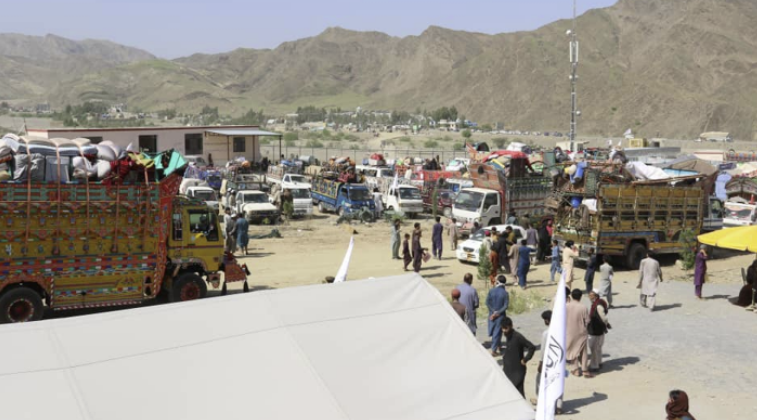
The High Commission for Refugee Affairs in Afghanistan announced that on Friday, 1,119 Afghan families returned to their homeland from neighboring Iran and Pakistan, marking a significant movement of displaced people back into the country.
According to an official statement from the commission’s Secretariat, 710 families, comprising 3,463 individuals, crossed into Afghanistan from Pakistan through the Islam Qala border in Herat province on August 7. These families were promptly registered, and financial assistance totaling 5.5 million Afghanis was provided to 696 of them to support their initial resettlement.
From Iran, 110 families with 525 members returned to Afghanistan via the border crossing in Veshkum, Nimroz province. Among these, 103 families received a total of 857,000 Afghanis in aid. Additionally, 94 individual travelers also returned from this route.
Furthermore, 14 families consisting of 77 members were transported from Nimroz to their respective provinces, receiving transport allowances of 76,000 Afghanis.
In Nangarhar province, 202 families (1,114 people) crossed back into Afghanistan through the Torkham border. Alongside them, 141 families totaling 788 individuals were relocated to their home provinces, with transport costs amounting to 332,000 Afghanis. The returning families at Torkham received approximately 1.6 million Afghanis in financial assistance.
At the Spin Boldak crossing in Kandahar, 92 families (519 members) were registered upon return and received 800,000 Afghanis in aid. Additionally, 54 families comprising 297 people were transferred to their home provinces with 332,000 Afghanis allocated for transportation.
From Kabul, 263 families totaling 1,296 people were moved to their respective provinces, with travel allowances reaching nearly 936,000 Afghanis.
The commission also noted that returning families were provided with awareness and information sessions covering registration procedures, transportation support, financial assistance, temporary accommodation, and educational guidance. These sessions also focused on encouraging patience, resilience, and understanding of the Islamic system and migration challenges. A total of 748 SIM cards were distributed to these families to facilitate communication.
This large-scale repatriation reflects ongoing efforts by the Afghan authorities and international partners to manage the complex challenges faced by refugees and internally displaced persons, aiming to support their safe and dignified return.